
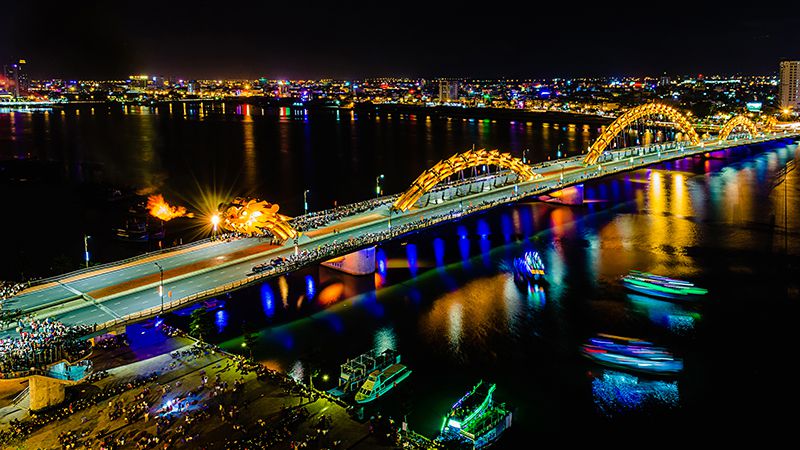
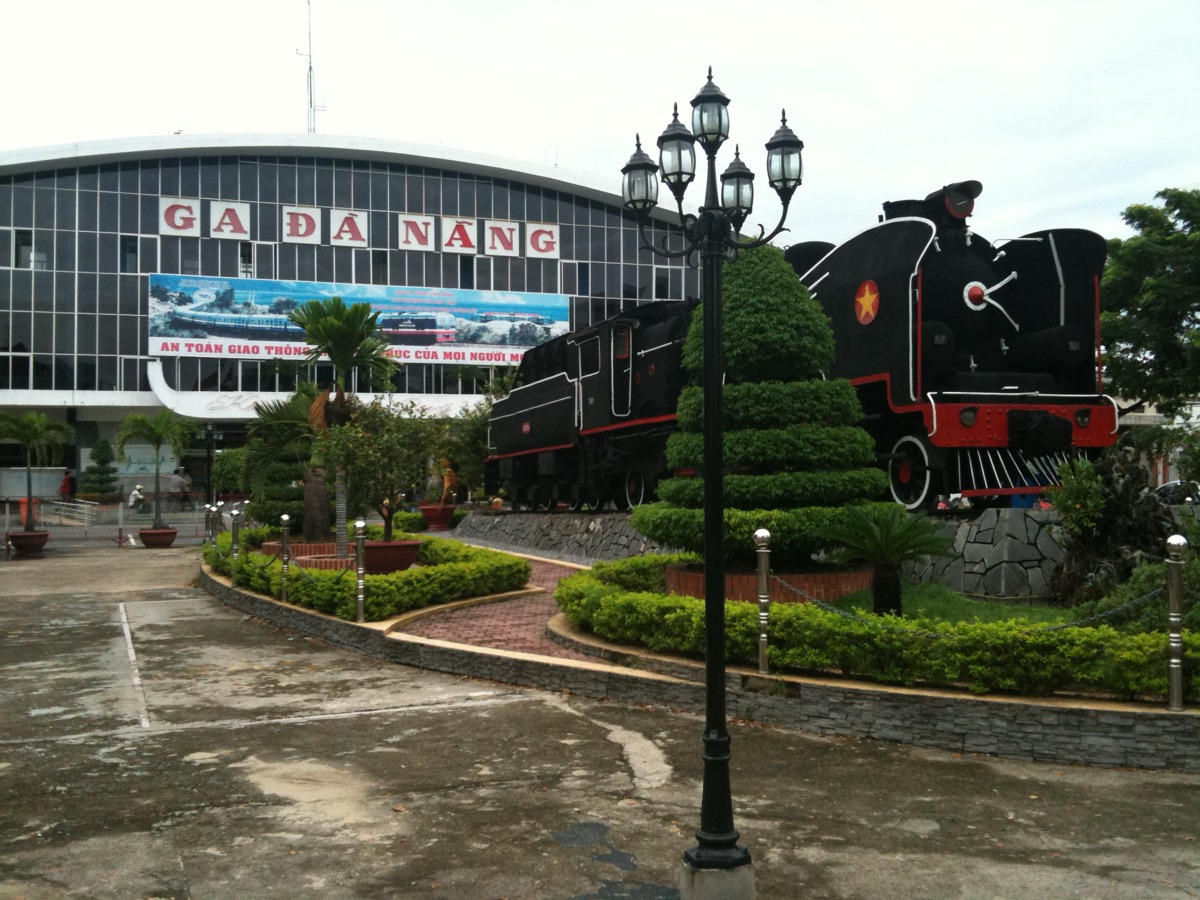
Da Nang's city government has formally approved a proposal by Trường Hải (Thaco Group) to develop the city's first urban rail network, a two-phase system that will ultimately stretch 103.8 kilometres from the international airport south to the Chu Lai industrial zone, passing through central Da Nang and the ancient town of Hoi An.
The project will be developed in partnership with Hyundai Rotem, the South Korean rolling stock manufacturer, and implemented through Đại Quang Minh Company, a subsidiary within the Thaco Group. Total investment for both phases is estimated at VNĐ265.9 trillion, or approximately $10.6 billion USD.
Phase One: Airport to Hoi An
The first phase covers a 30.2-kilometre corridor from Da Nang International Airport (DAD) through the city centre and south to Hoi An. Construction is scheduled to begin in Q1 2027, with the line entering operation in 2032.
When complete, the airport to Hoi An journey, currently a 45-minute taxi or Grab ride, will take just 20 minutes. That's a real change for the roughly four million passengers who move between the two destinations each year, a group that includes plenty of visitors who base themselves at Da Nang beach hotels and day-trip to Hoi An's Ancient Town.
Phase Two: Hoi An to Chu Lai
The second phase extends the network by 73.6 kilometres south from Hoi An to the Chu Lai Open Economic Zone, Da Nang's major manufacturing and logistics hub. Travel time from central Da Nang to Chu Lai, currently 90 minutes by road, will reduce to 40 minutes once the full network is operational.
The Chu Lai zone is already home to Thaco Group's automotive assembly operations and is earmarked for significant industrial expansion under Da Nang's 2031–2040 Master Plan.
Part of a 204-Kilometre Vision
The Thaco-Hyundai Rotem line is the first project to move forward within a far more ambitious long-term transit plan. Da Nang's 2031–2040 Master Plan includes 16 urban rail routes spanning 204.7 kilometres, comprising 11 light rail (LRT) lines, three tourism LRT routes serving the mountains and coast, and two metro (MRT) lines.
Da Nang's Finance Department confirmed that Thaco had studied the project and submitted formal proposals to the city, with director Trần Thị Thanh Tâm noting the group's preparatory work with Hyundai Rotem as the basis for the approved proposal.
What It Means for Visitors
For travellers, the most immediate implication of Phase One is practical: a direct, reliable rail link between the airport and Hoi An will significantly change how people structure their itineraries. The current reliance on taxis, Grab, and private transfers, with the associated cost and traffic unpredictability, will be replaced by a fixed-schedule urban service.
Hotels along the My Khe beachfront sit directly on the Phase One corridor between the airport and Hoi An, so they stand to benefit most. Guests staying at Da Nang beach resorts will get a straight rail run to Hoi An's restaurants, tailors, and Ancient Town instead of booking a taxi or Grab for the trip.
Construction is still six years out, so nothing changes for visitors this trip or the next few. But naming a real developer with a Korean manufacturing partner attached is further than any previous Da Nang transit proposal has gotten. It is the kind of infrastructure that eventually separates a serious regional city from a place that just gets tourists through it.
Source: Vietnam News