The five areas worth considering, what each does best, and where we'd actually stay.
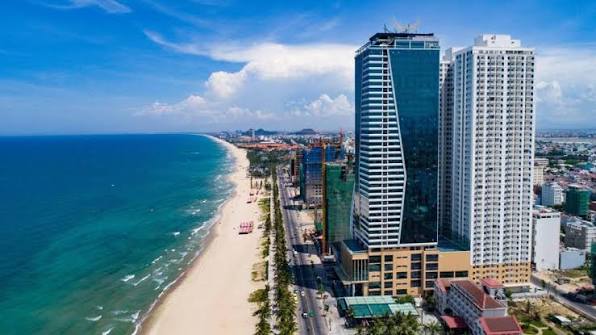
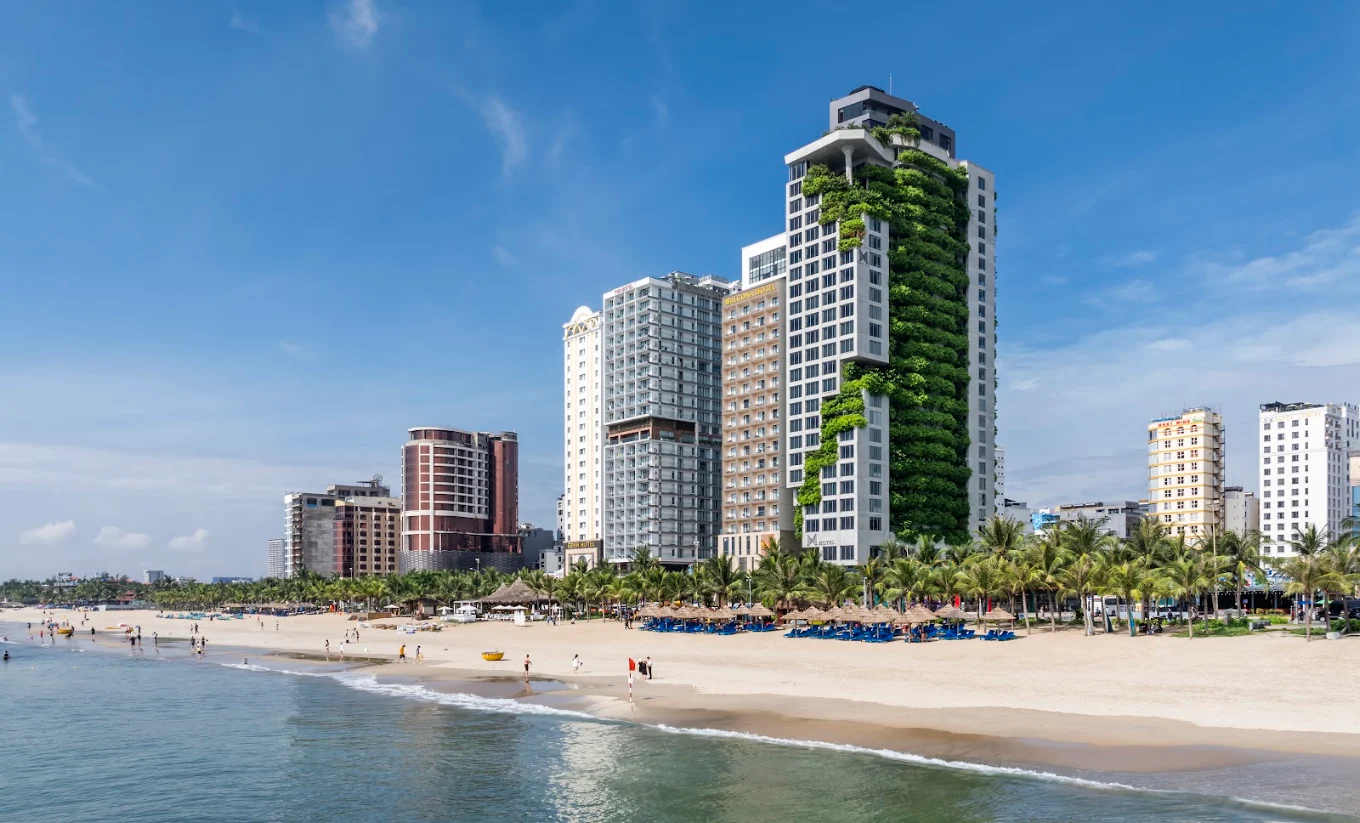
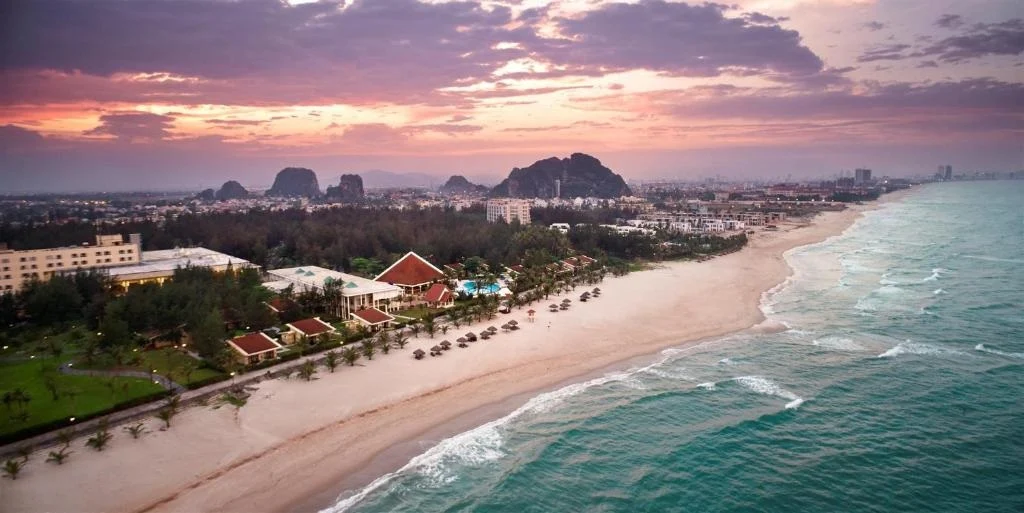
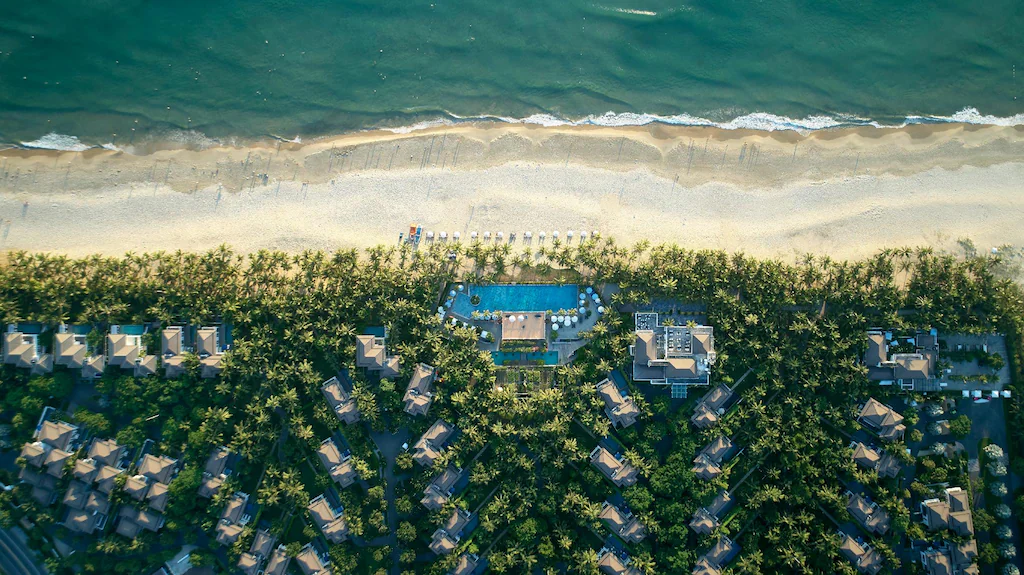
My Khe Beach is the correct default for most first-time visitors. The beach is two minutes from your room, An Thuong's restaurants and bars are walkable, and the airport is ten minutes by Grab. Hotels run from $40 guesthouses to $200 beachfront resorts. If you're choosing one area without a specific reason to go elsewhere, this is it.
Read the full My Khe breakdown →The right default for first-time visitors to Da Nang.
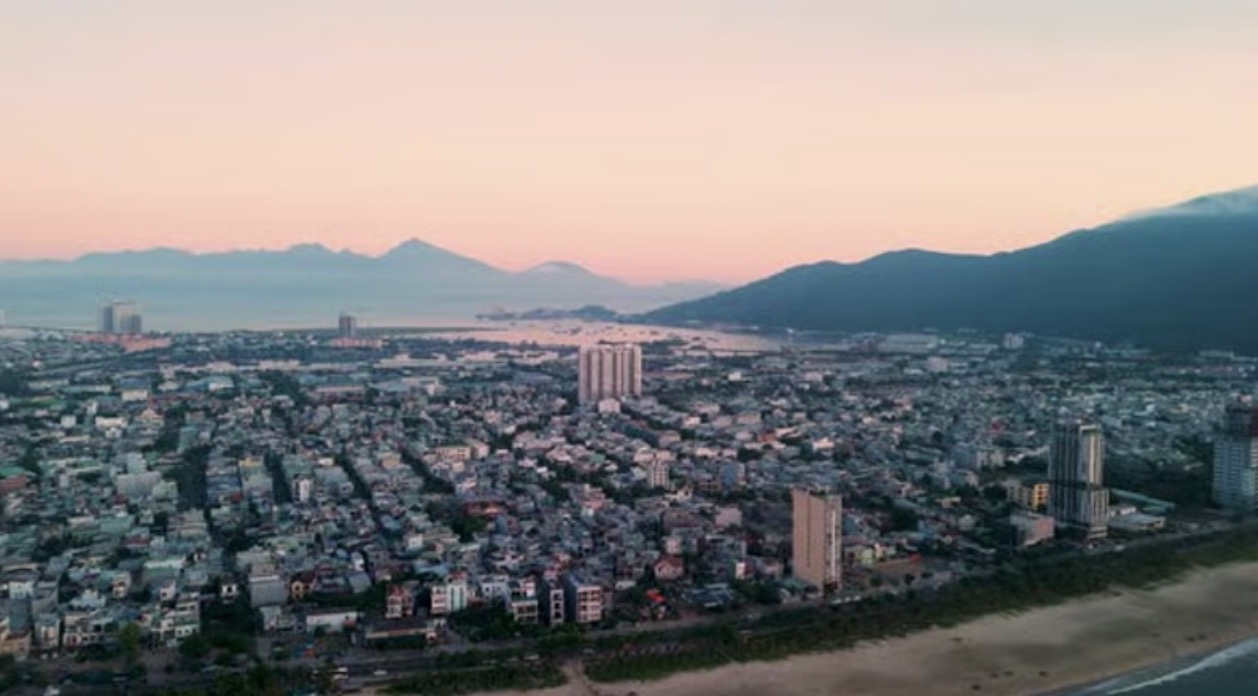
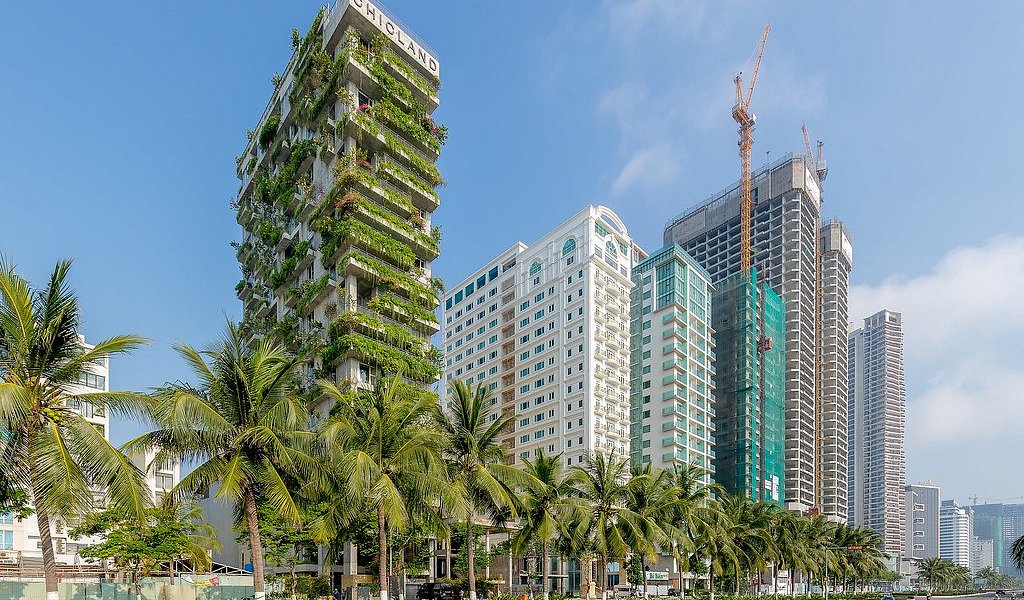
Most visitors to Da Nang should stay at My Khe Beach. The beach is a two-minute walk. An Thuong's restaurants and cafes are eight minutes on foot. The airport is ten minutes by Grab. Nothing about this base requires planning — you simply leave your hotel and Da Nang is in front of you.
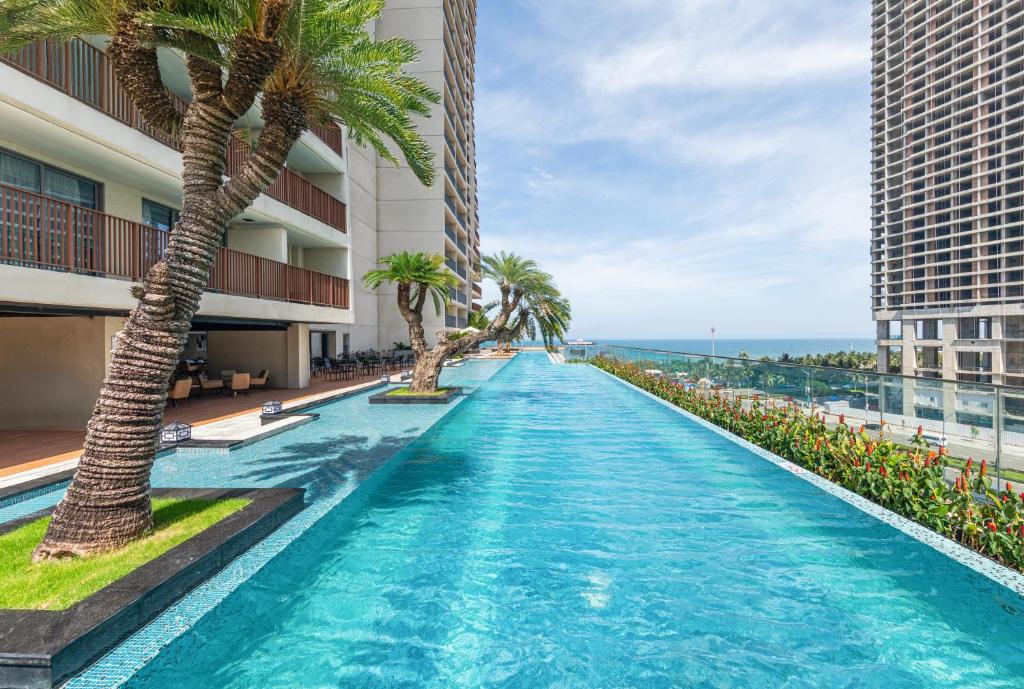
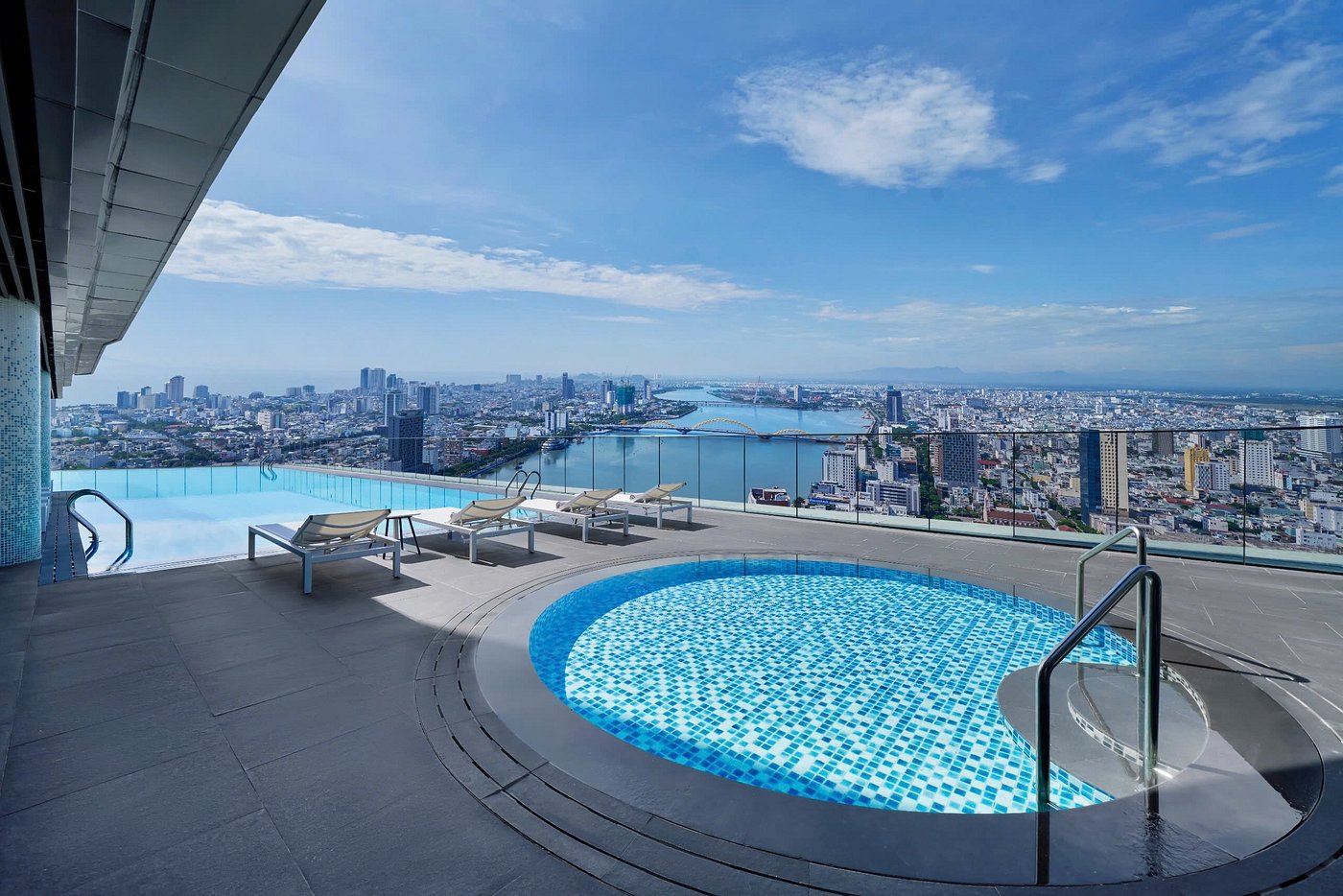
The hotel selection here is the widest in the city. Budget guesthouses from $35, mid-range beachfront properties from $70, and 4-star resorts with rooftop infinity pools from $120. The mid-range bracket at My Khe is the best value for money in Southeast Asia at this category — a beachfront room with a pool that costs $200 in Seminyak or Patong runs $80 here.
The beach itself stretches 8km. The prime section, where most hotels sit, is between the An Thuong neighbourhood and the Marriott further south. Wide enough that weekday mornings feel calm; busier on peak-season weekends — July and August in particular.
Da Nang's expat quarter. Cafes, bars, and the best food street in the city, five minutes from My Khe.
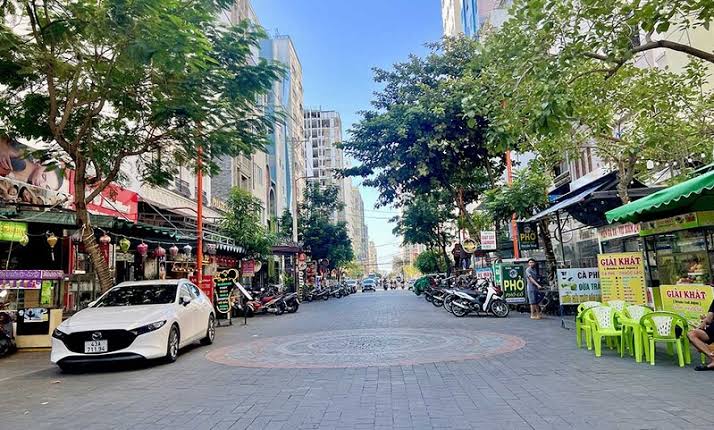
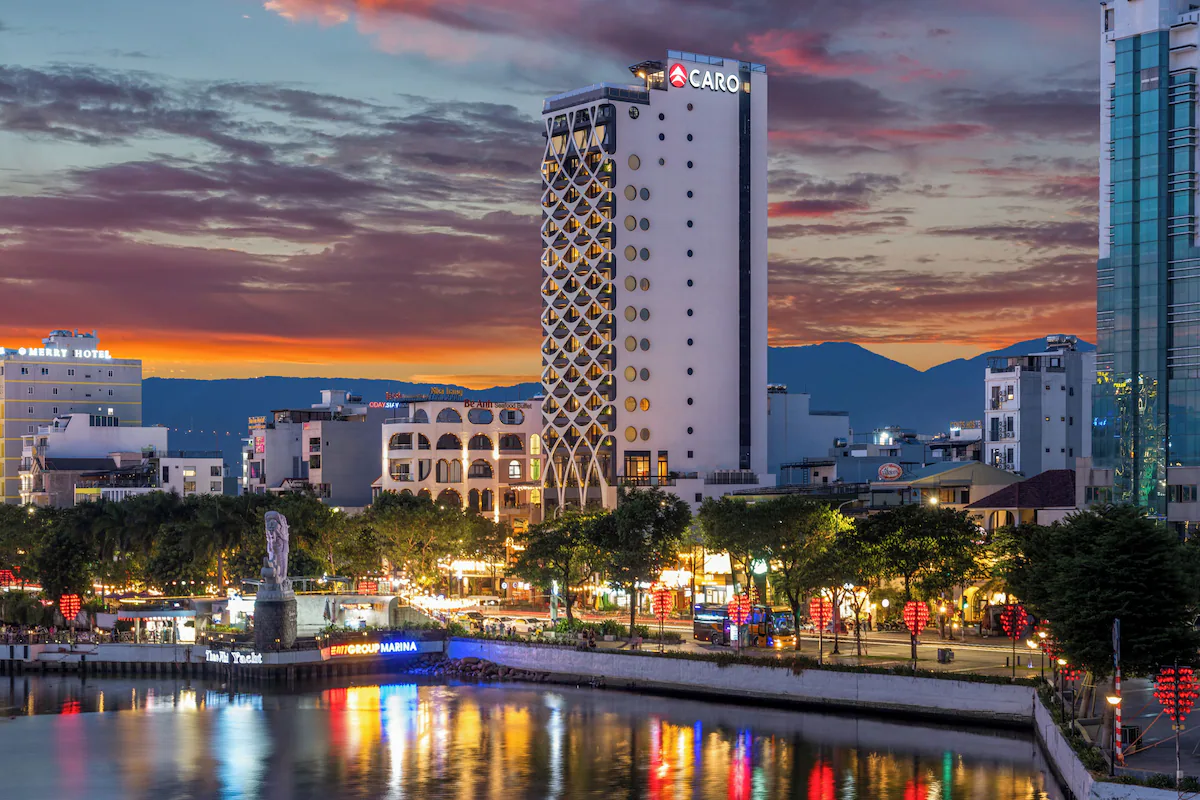
An Thuong isn't a separate area — it's the neighbourhood pocket directly behind My Khe's northern end. A grid of about twelve streets, where every second building is a café, restaurant, rooftop bar, or boutique guesthouse. It's where Da Nang's expat community eats and where digital nomads cluster when they're in town for a month.
The café quality is genuinely good: proper Vietnamese pour-over, sourdough, Western breakfast alongside excellent bánh mì and pho spots, often on the same street. The bar scene runs from casual open-front beach bars to proper cocktail establishments. The beach is five minutes' walk.
For visitors who want to be near the sand but also want somewhere to go in the evenings beyond their hotel restaurant, An Thuong is the right address. It's not glamorous — scooters, street noise, working neighbourhood — but it's genuinely alive in a way the beachfront strip isn't.
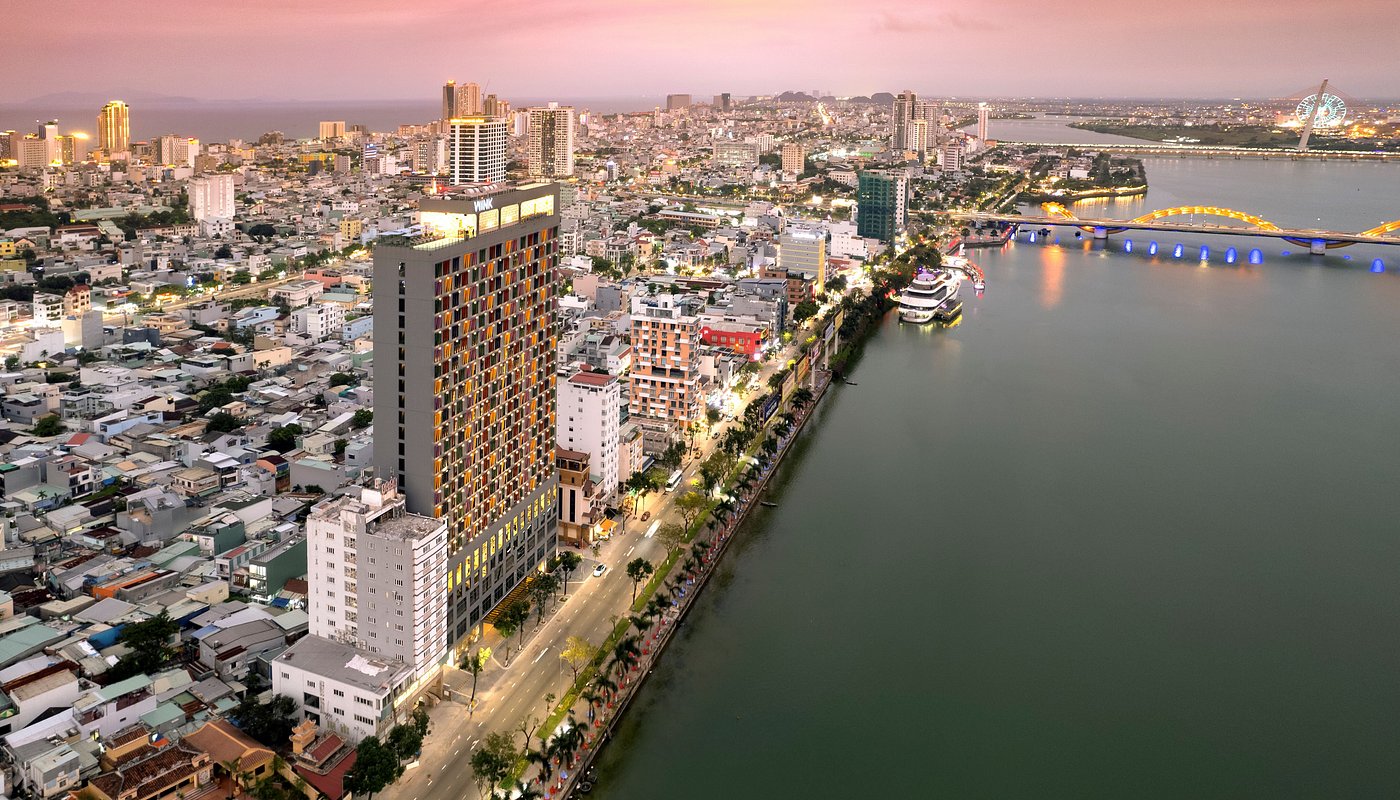
Dragon Bridge, Han Market, museums, and rooftop bars. Choose this if you came to explore Da Nang, not to beach it.
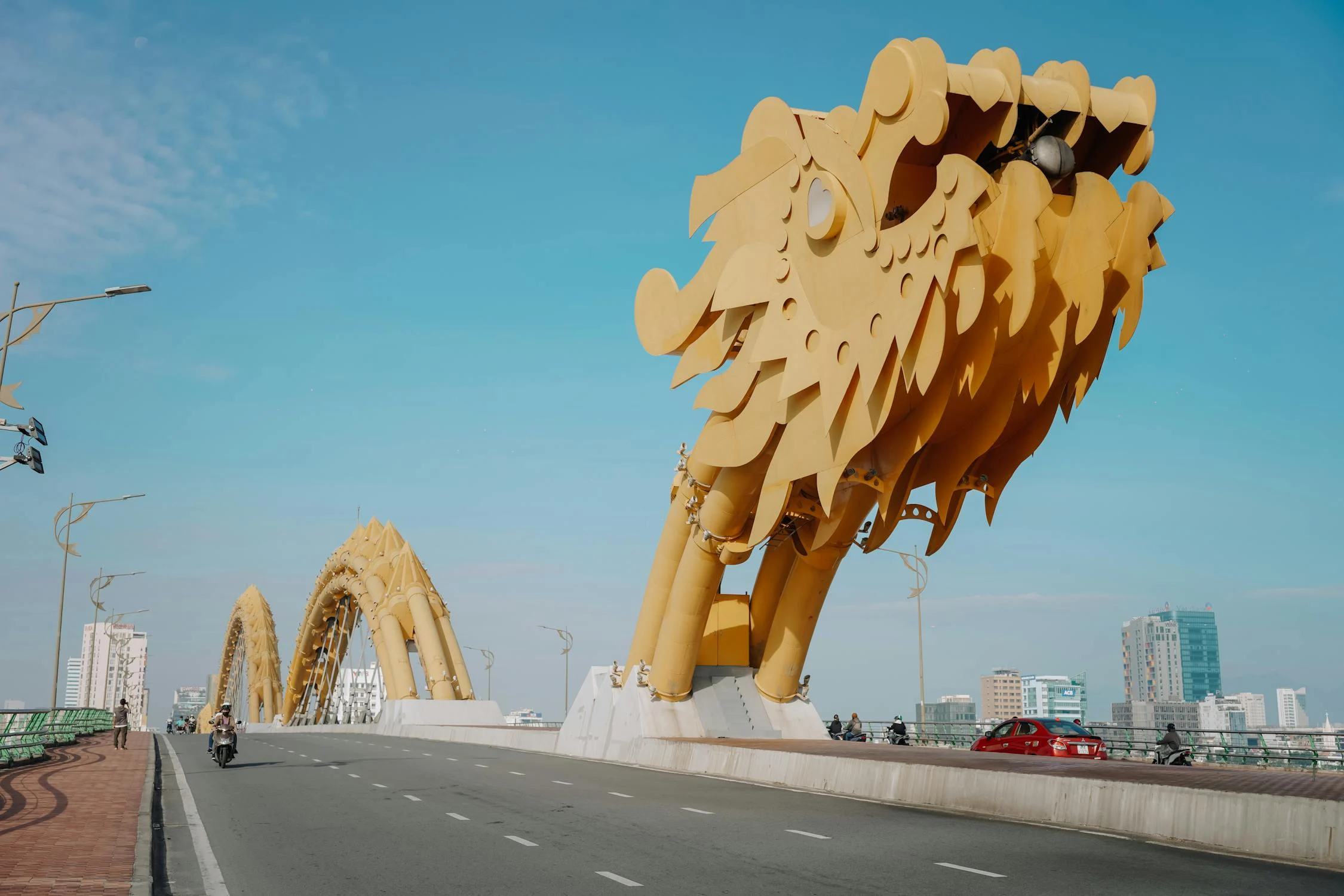
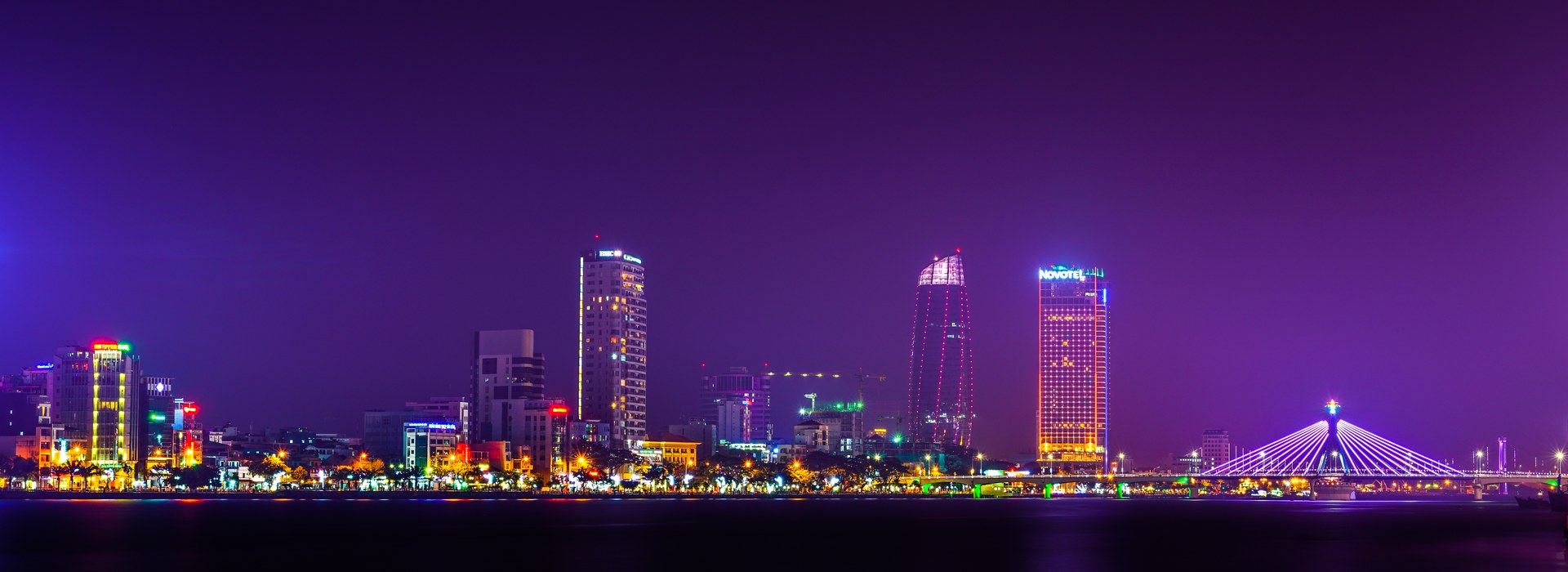
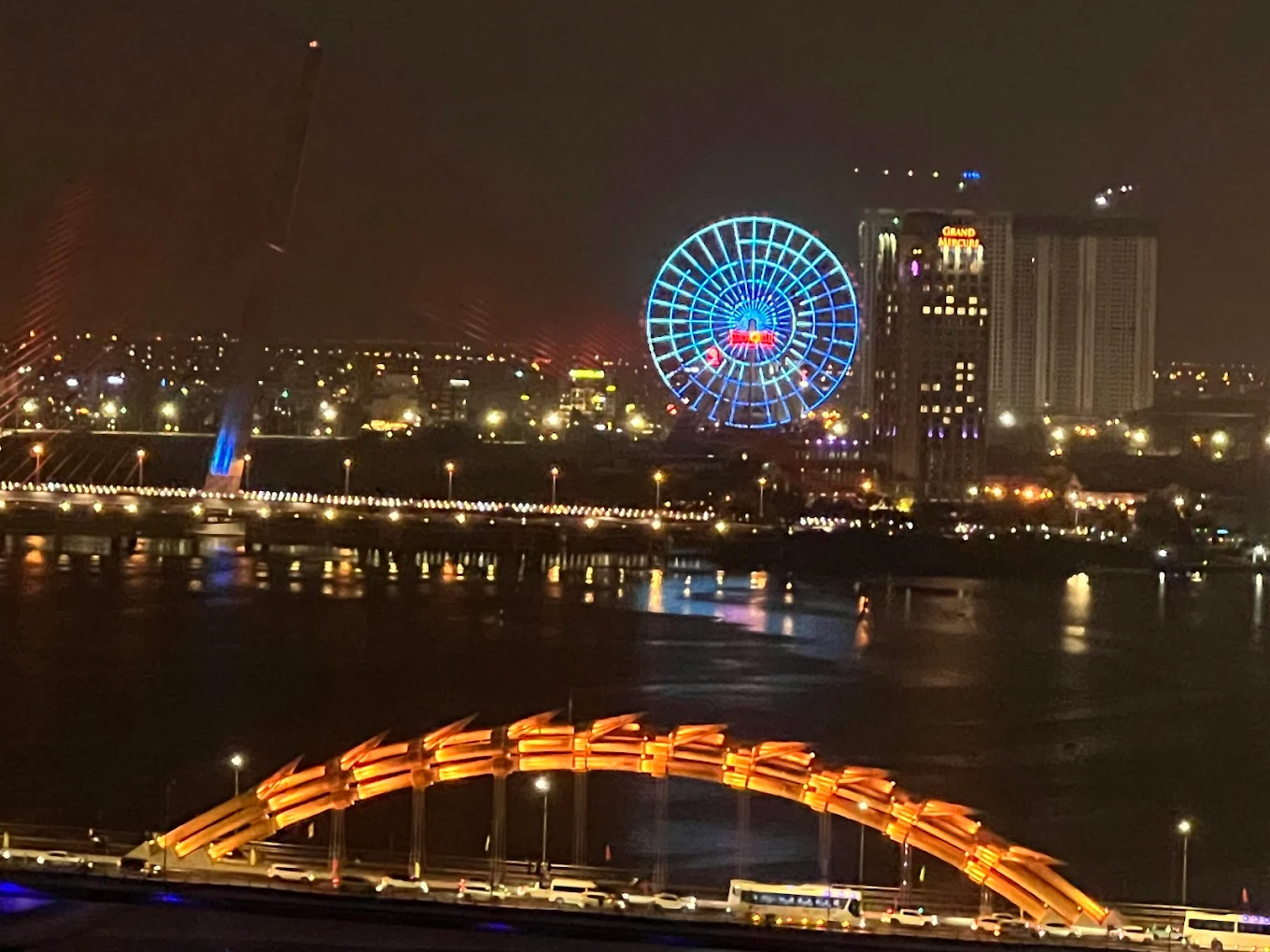
The Han River district is the authentic Da Nang that beach-focused tourists rarely see. From a river-facing room, you get the city skyline, illuminated bridges at night, and — on Saturday and Sunday evenings at 9pm — a front-row seat to the Dragon Bridge fire and water show.
Han Market, Da Nang's busiest traditional market, is here. The museums are here. Transport connections to Hoi An are slightly better from this side of the city. If your Da Nang is about culture and city life rather than beach, the Han River area is the right base.
The trade-off is honest: My Khe Beach is 15–20 minutes by Grab ($2.50–4). That's manageable for a 2–3 night city-focused stay, but if you find yourself wanting to swim every morning, you'll feel the distance daily.
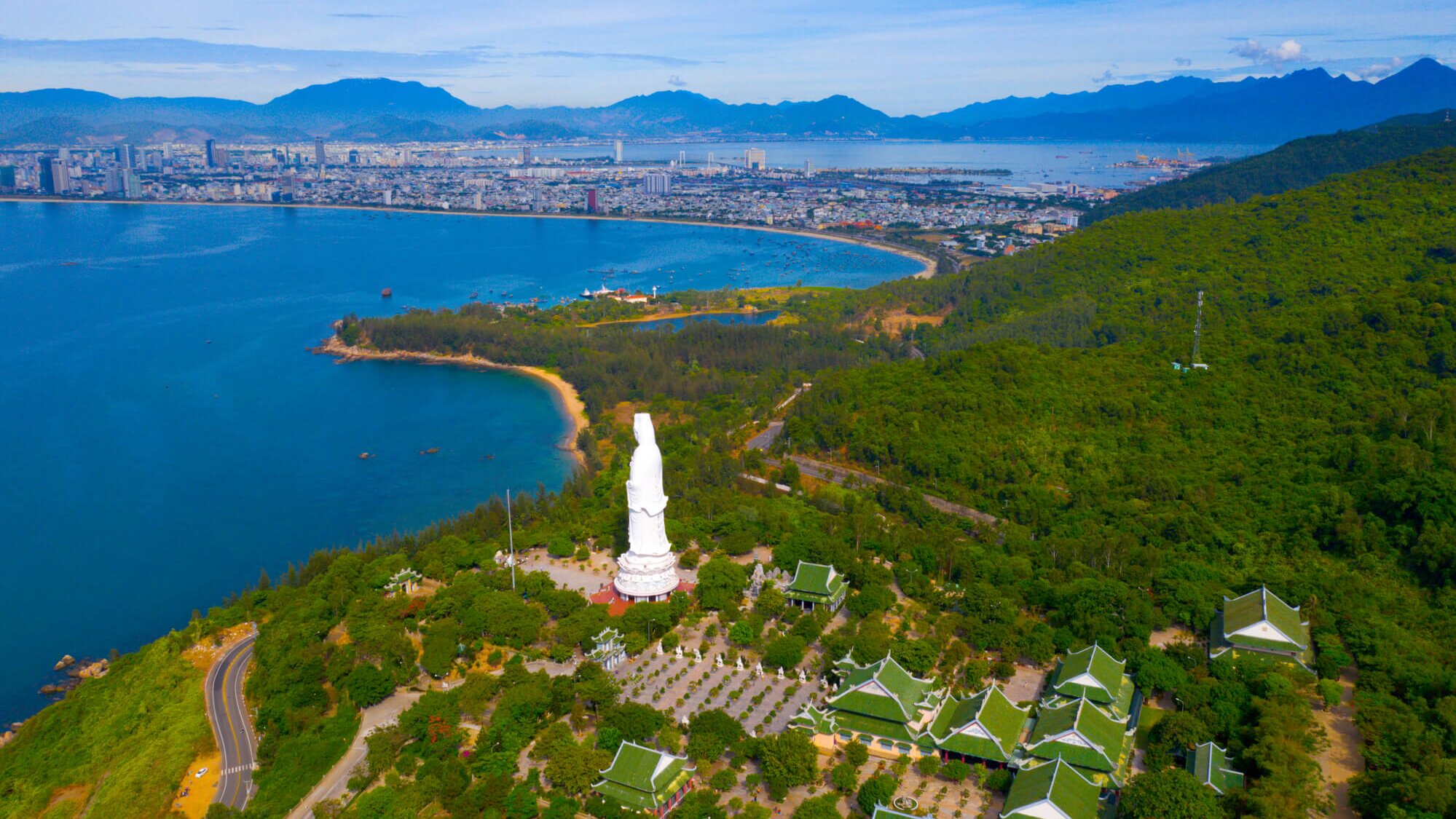
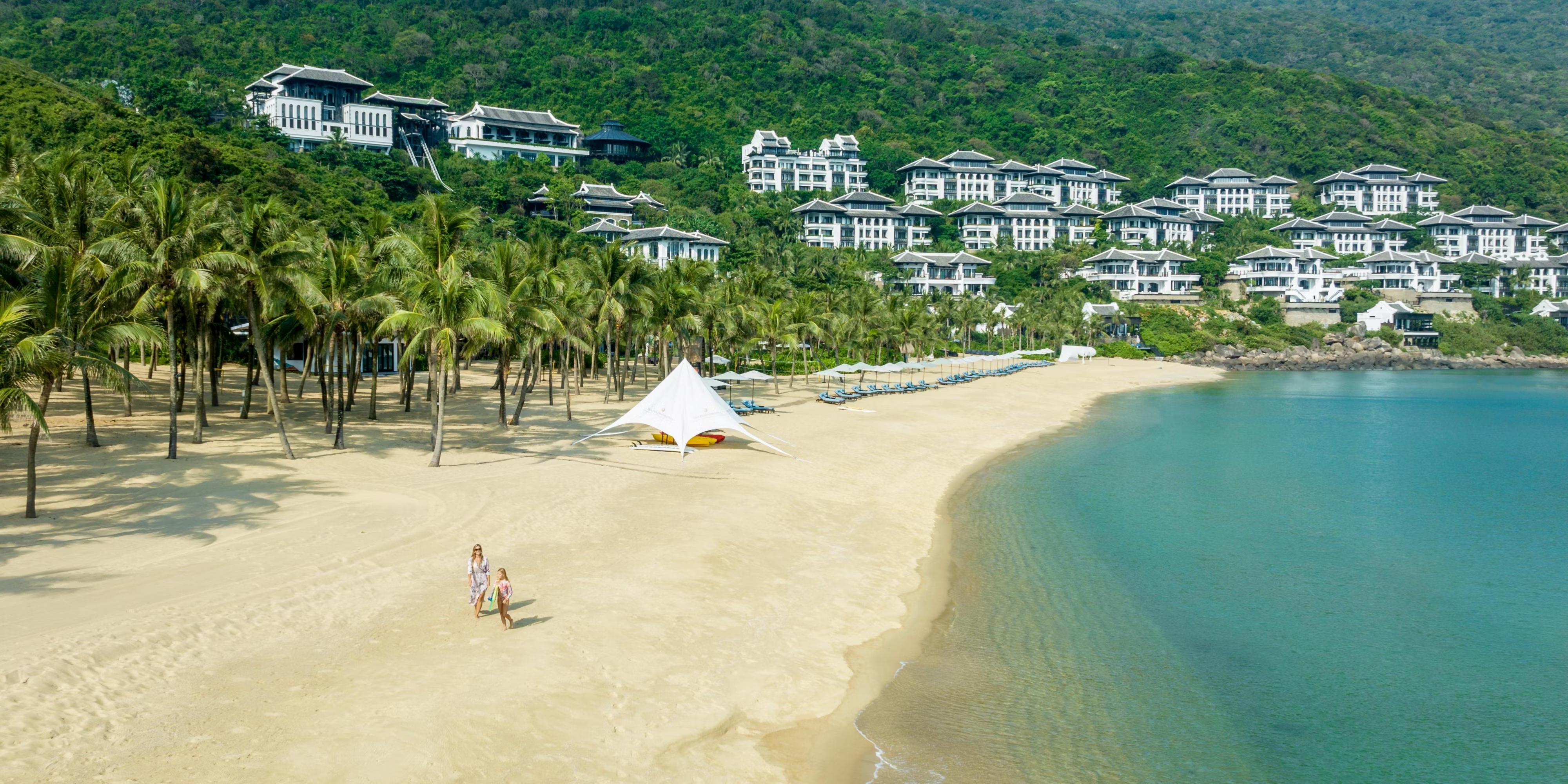
A forested mountain peninsula above the city with private bays and Vietnam's most architecturally remarkable hotel. Not a base — a destination.
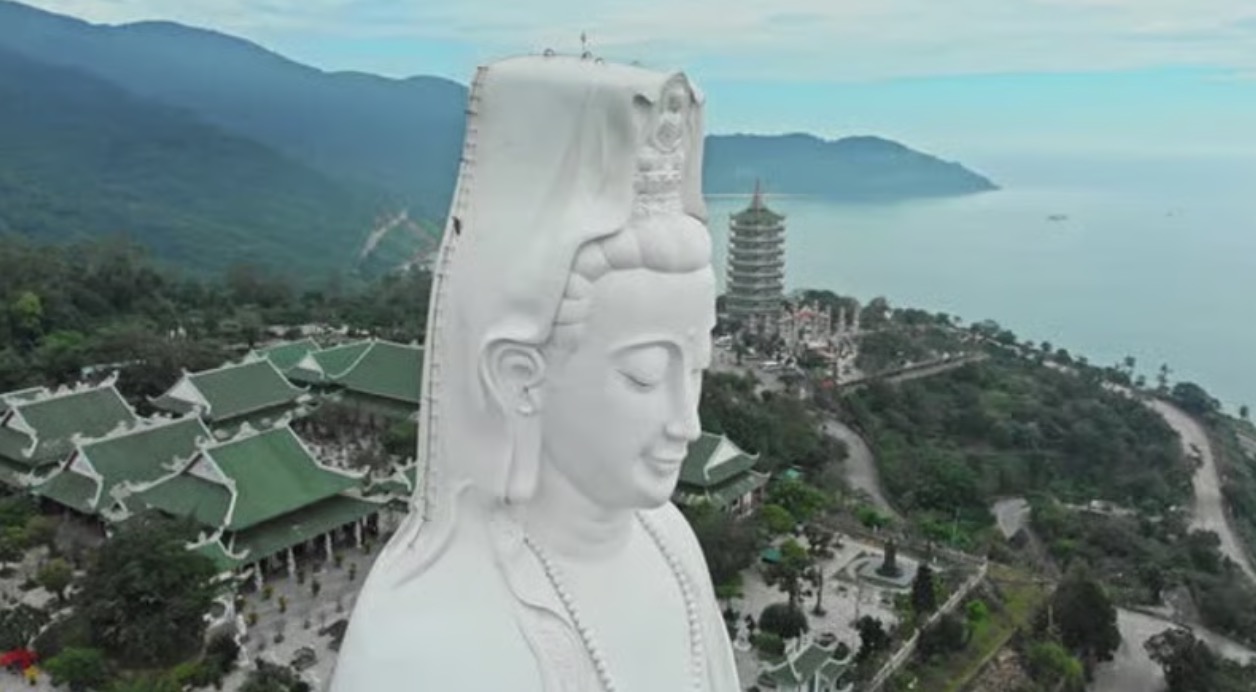
Son Tra Peninsula is a protected nature reserve 15km northeast of the city. Development is severely restricted, which means only two major hotels operate here, and the jungle, cliffs, and private bays feel genuinely untouched. That restricted access is the whole point.
The InterContinental Danang Sun Peninsula Resort cascades down a forested hillside in five levels connected by funiculars — Bill Bensley designed it to be indistinguishable from the landscape. Four infinity pools, a MICHELIN-recognised restaurant, private beach. At $350–600 a night, you don't need to leave, and most guests don't.
The peninsula is also home to one of Vietnam's last significant populations of red-shanked douc langurs — striking coloured primates visible along the road to the summit at dawn. Most guests plan to skip it and end up calling it the most memorable part of their stay.
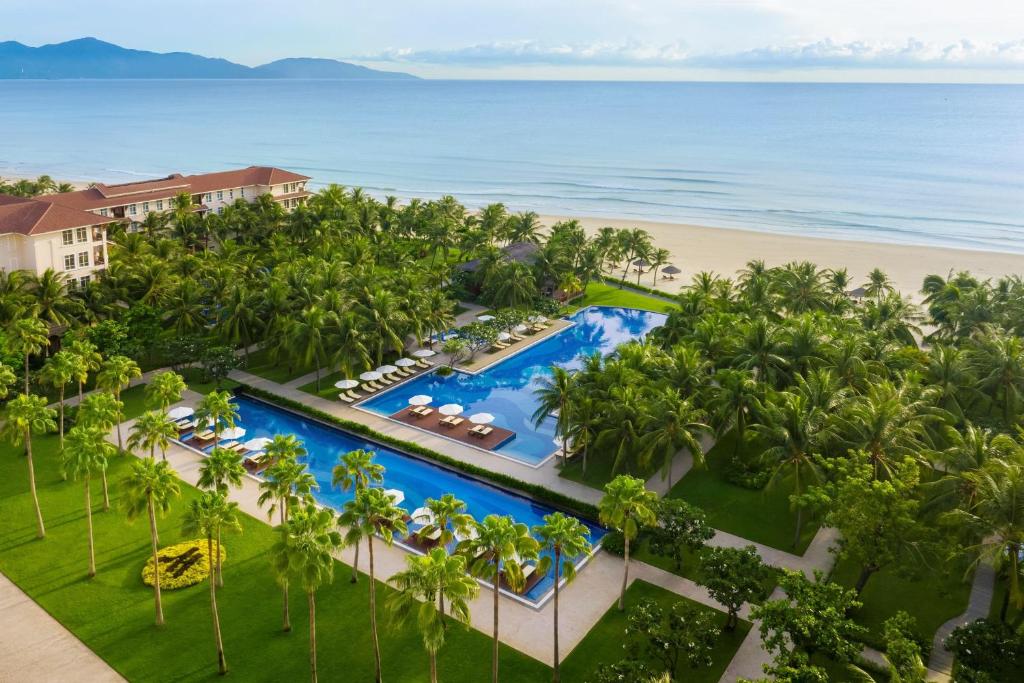
Wider, quieter beach south of the city. The Hyatt, Sheraton, and Furama are here. The right call for families who want a full-resort week.
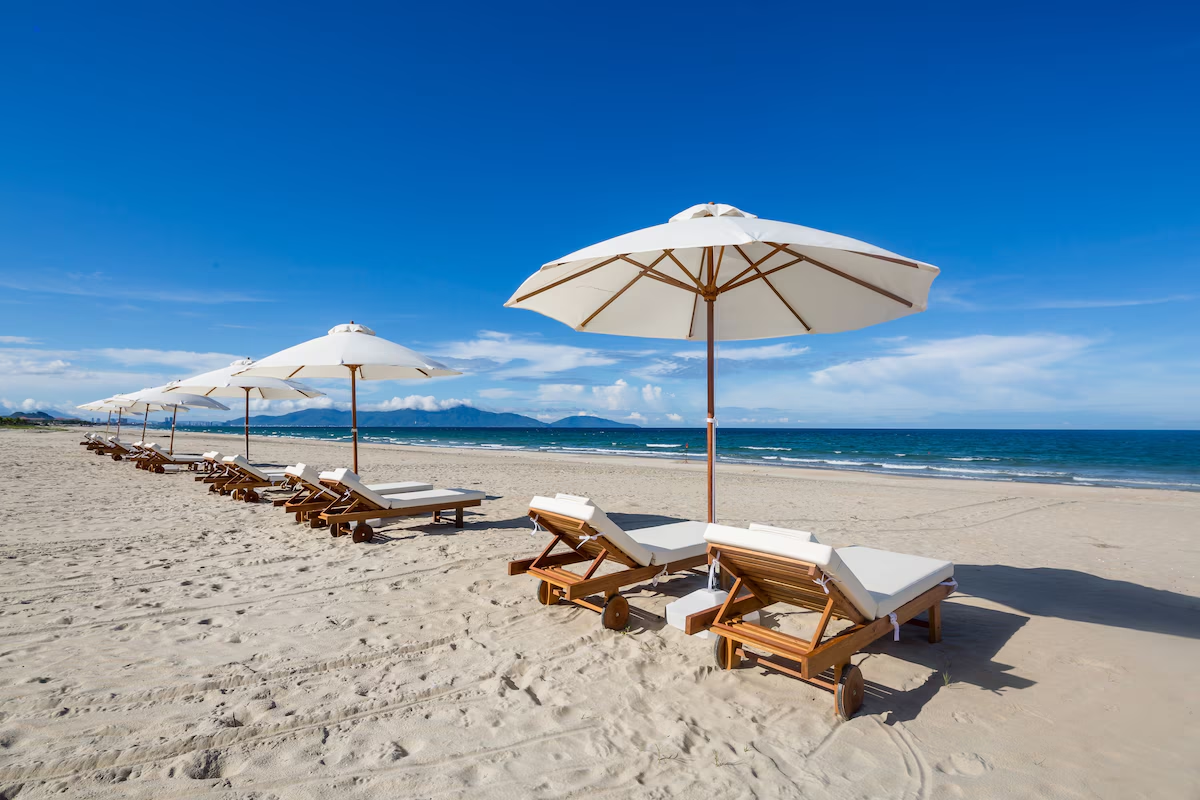
Non Nuoc is Da Nang's southernmost coastal stretch, running toward the Marble Mountains and the start of the Hoi An corridor. The beach is measurably wider than My Khe and significantly less crowded — on weekday mornings you'll sometimes have long stretches entirely to yourself.
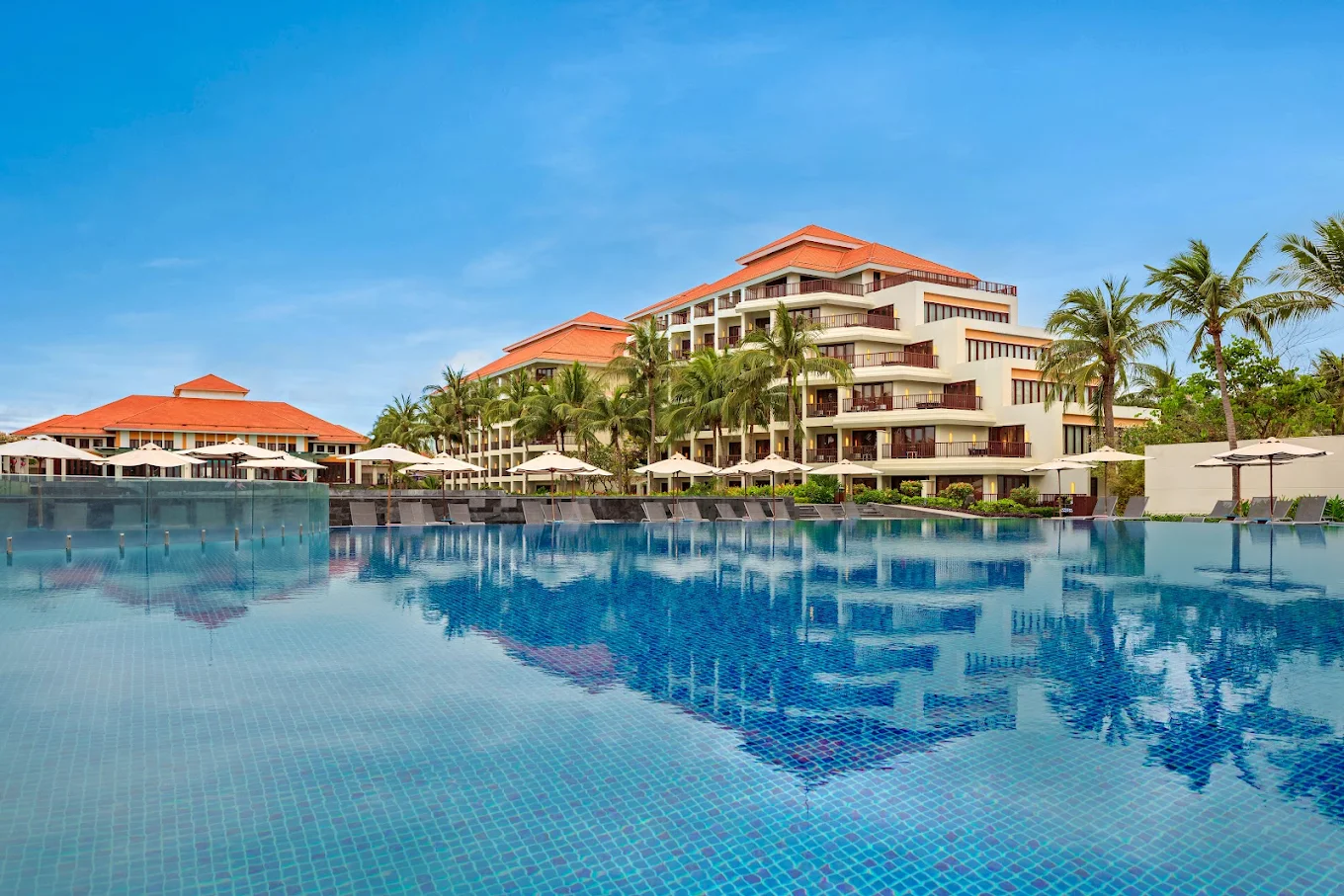
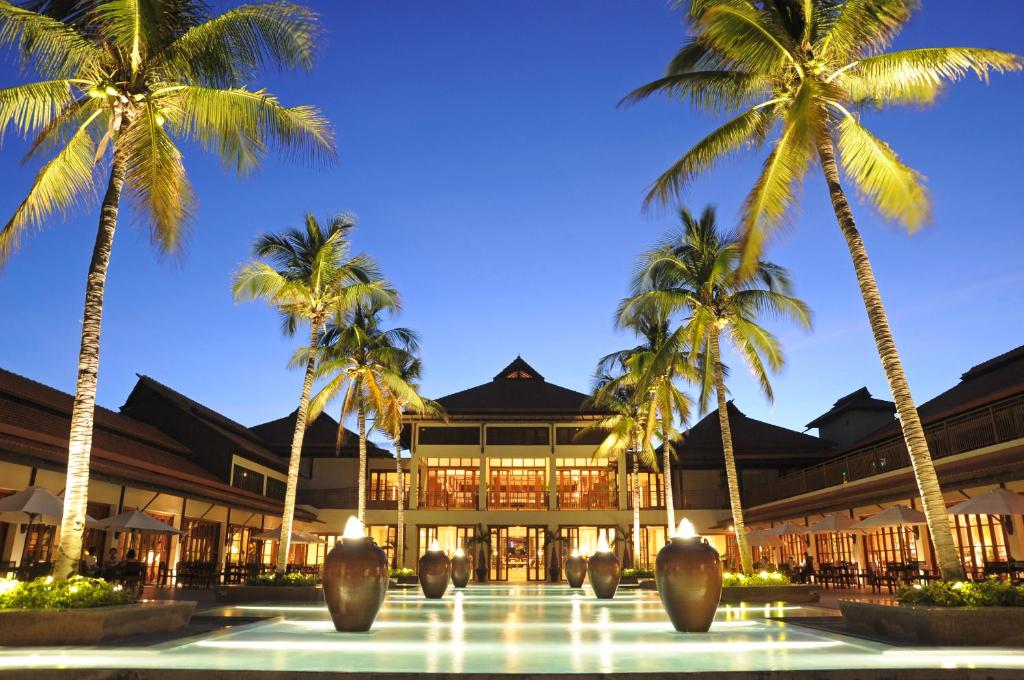
The resort infrastructure here is exceptional. The Hyatt Regency Danang has six pools including a lazy river and 750m of private beach. The Sheraton Grand has Da Nang's best family water complex. Furama — open since 1997 — has tropical gardens that three decades of growth have made feel genuinely lush. These are self-contained resort worlds; most guests leave once or twice and spend the rest of the week inside.
That can be exactly right or exactly wrong, depending on what you came for. If the resort is the destination — pools, spa, meals, beach — Non Nuoc wins. If you want city access, nightlife, or flexible dining, accept that you'll Grab everywhere: the city centre is 20–25 minutes away.
All five zones sit within a 25-minute drive of each other. Click any pin to learn about each area.
For first-time visitors, the beach — specifically My Khe Beach — is the clear choice. Direct sand access, walkable restaurants and bars, and the city's best hotel concentration at every price point. The Han River suits business travellers and those prioritising city exploration over beach time. Most visitors who request "city views" spend their trip wishing they were closer to the water.
Significantly cheaper. A beachfront 4-star hotel that costs $200+ in Seminyak or Patong runs $65–120 at My Khe Beach in mid-season. Street food meals cost $1.50–4. Grab rides across the city rarely exceed $3. Da Nang consistently undercuts comparable beach destinations in Southeast Asia by 30–50%, and the hotel quality at the same price is genuinely better.
My Khe Beach — beach access, walkable amenities, the city's best restaurant concentration, and short Grab distances to every major attraction. Stay in the central My Khe or An Thuong pocket for the best balance. Hotels range from $40 guesthouses to $200 beachfront resorts. The airport is 10 minutes away. There is no better default for a first visit.
Stay in Da Nang, day-trip to Hoi An. Da Nang has better hotels at every price point, an international airport, a real beach, and lower prices. Hoi An is a UNESCO Old Town — gorgeous to walk around, but expensive for its hotel quality and genuinely congested with tour groups. The drive is 30 minutes. Use Da Nang as your base and you get both cities.
October and early November are the wettest period — the northeast monsoon brings heavy rain and rough ocean conditions. Red flags mean no swimming, and they're not advisory. If your priority is beach time, visit March through August. September and late November offer a reasonable compromise: lower prices and mostly acceptable weather.
Families and couples who want a full-resort experience and don't need to be in the city. The Hyatt Regency, Sheraton Grand, and Furama are all here, with exceptional pools and a quieter beach than My Khe. The trade-off: 20–25 minutes to the city centre. If the resort is your destination, Non Nuoc wins. If you want to explore freely, stay north.
Yes — Da Nang is the best base in central Vietnam. Hoi An is 30 minutes south by Grab. Hue is 2.5 hours north by car or 45 minutes by train. The Marble Mountains, Ba Na Hills, and Lady Buddha are all within 45 minutes. Most travellers do Hoi An as a day trip and Hue as an early train with a return the same evening.