
Updated 2026
Da Nang Weather by Month
Temperature, rain, beach conditions, and the best months to visit, all in one visual guide.
Updated 2026
Temperature, rain, beach conditions, and the best months to visit, all in one visual guide.
Three ways to think about timing, depending on what you're optimizing for.
Warm, low rain, comfortable evenings, good beach conditions, and you beat the summer heat and crowds. March is the driest month of the year. April is a notch warmer and loses nothing. This is the safe recommendation for most trips.
Peak vacation season. Hot, busy, and the best window if you're tied to school holidays. Sea hits its warmest, beach days are reliable, and the energy in the city is at its highest.
Hotel rates hit their yearly low and that's tempting. But rainfall and storm risk are real in this window, not theoretical. Only worth it if your plans don't depend on the beach.
The essentials for each month, not a wall of text.


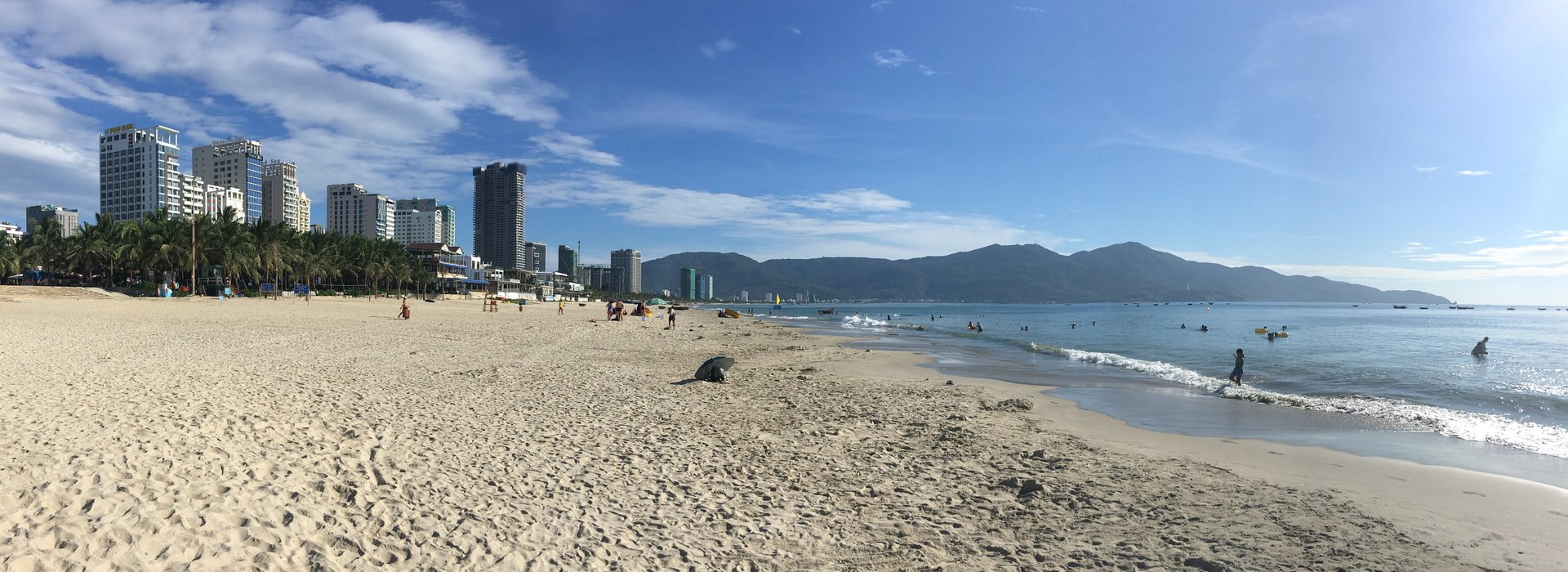



Da Nang's weather is split cleanly into two halves. Roughly eight months of the year, from February through early September, are dry, hot, and beach-reliable. The other four, from mid-September through January, are wetter and less predictable, with October standing well apart as the one month I'd actually steer people away from.
None of this means the rest of the year is off-limits. It means you plan around it. Charts and month cards below cover the rest.
Long-term monthly averages. The rainfall spike in October is not a typo.
If weather is your main planning constraint, start here.
Not "avoid at all costs." Weather here just gets a lot less reliable, not universally bad.
Rainy season doesn't mean constant rain. It means the odds shift against you, and when rain does come, it tends to be heavier and less predictable than a normal shower. October averages 21 rain days out of 31 and roughly 620mm total, more than London gets in a full year. That's not "occasional showers." That's sustained downpours with real flooding risk in low-lying areas.
September and November are more forgiving. City plans, restaurants, and museums work fine in both. It's specifically outdoor and beach time that becomes unpredictable.
If beach weather is the priority and you only have a handful of days, don't gamble on October or November. The odds aren't in your favor and you don't have days to spare if it goes wrong.
If you're staying a week or more and hotel value matters more than guaranteed sun, rainy season can still work. Build in flexible plans, expect some indoor days, and treat any clear afternoon as a bonus.
Tropical storms and typhoons can affect Da Nang during the wet season, most often August through November, with October and November historically the highest-risk months. Impacts range from heavy rain and wind to rough seas and flight disruption. Most years pass without a direct serious hit, but it happens often enough to plan around, not ignore.
If you're traveling in that window, buy travel insurance that covers weather disruption, keep your accommodation flexible, and check the forecast in the days before you fly rather than months in advance. This isn't a reason to avoid Vietnam in autumn. It's a reason to build in a plan B.
Water clarity, swell, and swimmability, not just whether the sun is out. See the full My Khe Beach guide for a closer look.
Warm enough to swim comfortably most of the year. Peak window is May through September, when surface temps hit 28-30°C. Even in the coolest months the water rarely drops below 23°C: cold by Da Nang standards, fine by most other standards.
Sea temperature estimates based on regional South China Sea data and local observation. October–November conditions are rough regardless of temperature, due to swell and red flags.
Late spring through summer, June through August, all averaging 33°C highs. The number understates it. Humidity is what actually gets you, and midday sun (roughly 11am to 3pm) is intense enough that most locals restructure their day around it rather than push through it.

Ba Na Hills sits at roughly 1,400m elevation, and that changes the weather system entirely. It's cooler than the coast, cloudier more often, and conditions can shift within an hour, clear one moment and fogged in the next.
A hot, cloudless day at My Khe Beach tells you nothing about what you'll see at the top of the cable car. Check the mountain forecast separately, and check it the morning of your visit, not the week before. This matters most during wet or overcast stretches of the year, when the odds of low cloud at altitude go up sharply.
Full Ba Na Hills guide →
Hoi An sits on largely the same regional weather pattern as Da Nang, 30 minutes south. Same wet season, same dry season, same general temperature range. What's different is the impact: the Ancient Town sits low next to the Hoai River, and during heavy October rain the river can overflow into the old streets, sometimes for days at a time.
We won't turn this into a separate weather article. For the full picture on Hoi An, including day-trip timing and what the Ancient Town is like across seasons, see the Hoi An travel guide.
Da Nang breaks into four rough blocks. Here's the one-line version of each.
Hotel rates track demand closely. July and August, when weather is at its most reliable, are also the most expensive weeks of the year. October and November, the wettest months, are consistently the cheapest. Neither is an accident. See the full month-by-month breakdown on the hotel prices guide.
A wet day doesn't have to be a wasted day. AEON Mall Da Nang and Lotte Mart both work as full half-day plans, air conditioning, food courts, and Lotte Mart's cinema and arcade if you've got kids in tow. Cafes across the city are built for exactly this, and a spa afternoon is a legitimate use of a rain day, not a consolation prize.
For a longer list of indoor options and how to structure a rainy day with kids or teens, see the Da Nang with kids guide or the Da Nang with teenagers guide. And when none of that appeals, GrabFood delivery and an early night are underrated.
Compare top hotels, check live rates, and book with free cancellation on most properties. Best hotels in Da Nang · Where to stay guide
Compare all Da Nang hotels on Booking.com →Affiliate disclosure: we earn a small commission when you book via our links, at no extra cost to you.