I've taken visitors here probably fifteen times. The consistent pattern: people expecting a major tourist spectacle are underwhelmed.
People who understand they're seeing a limestone karst riddled with Buddhist caves that doubled as Viet Cong field hospitals find it genuinely remarkable. Go before 9am — tour buses arrive at 10.
Skip the elevator on the way up and take the stairs: the view from the upper ledge isn't on any tour itinerary.

The Marble Mountains, Ngũ Hành Sơn in Vietnamese, are five limestone and marble karsts rising 9km south of Da Nang, each named after one of the five elements: Water, Fire, Earth, Metal, and Wood. They contain Buddhist cave temples that have been active for centuries, natural grottos lit by shafts of sunlight through ceiling openings, and summit viewpoints overlooking the South China Sea and Da Nang city.
Check prices for your dates in Da Nang
Live rates · Free cancellation on most hotels · Instant confirmation
This is Da Nang's best cultural half-day. It costs almost nothing, takes three to four hours done properly, and the interior of Huyen Khong Cave is genuinely spectacular.
Here's how to do it right.
Entrance Fees & Costs
| Item | Cost | Notes |
|---|---|---|
| Main entrance (adult) | 40,000 VND | Paid at gate on Huyen Tran Cong Chua street |
| Main entrance (child) | 20,000 VND | Under 1.3m height |
| Elevator (one way) | 15,000 VND | Takes you up inside the mountain, worth it going up |
| Elevator (return) | 15,000 VND | Optional, most visitors walk down via the steps |
| Hoa Son (Fire Mountain) | Separate ticket | 40,000 VND, fewer crowds, partial trails only |
| Total per person (typical) | ~55,000 VND | Elevator up + main entrance (~USD 2.20) |
Tip: Pay cash at the gate. VND only, no card readers at the entrance booths.
The nearest ATMs are on the main road 200m north of the entrance.

The Marble Mountains sit 9 km south of the city center — easy by Grab or motorbike.
"The Marble Mountains are one of the genuinely unmissable stops near Da Nang — ancient Buddhist shrines inside limestone caves, panoramic views from the summit, and a peaceful atmosphere that feels a world away from the beach strip just 9km north."
Which Mountain to Visit
Only Water Mountain (Thuy Son) is fully open to the public with developed paths, the elevator, and the main cave system. It's the largest, most impressive, and the only one worth planning your visit around.
Fire Mountain (Hoa Son) is accessible via a separate entrance on the western side and is worth adding if you have extra time, it's significantly quieter. The other three mountains have extremely limited or no public access.
The Cave Highlights
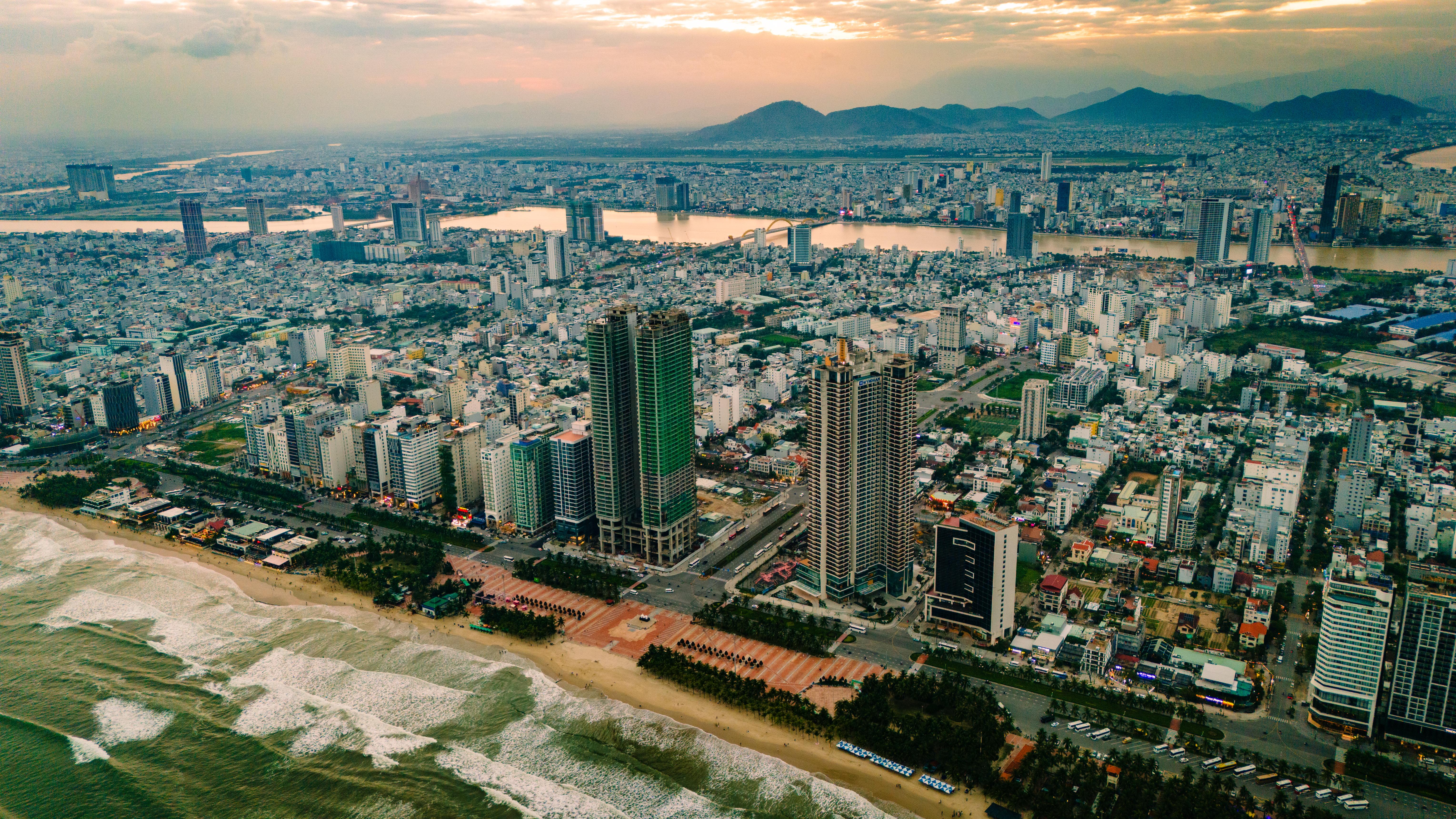
The view from Thuy Son's peak stretches south to Hoi An on a clear day.
Recommended Route
Follow this sequence to see everything in the right order, avoiding backtracking and hitting Huyen Khong Cave while the morning light is still optimal.
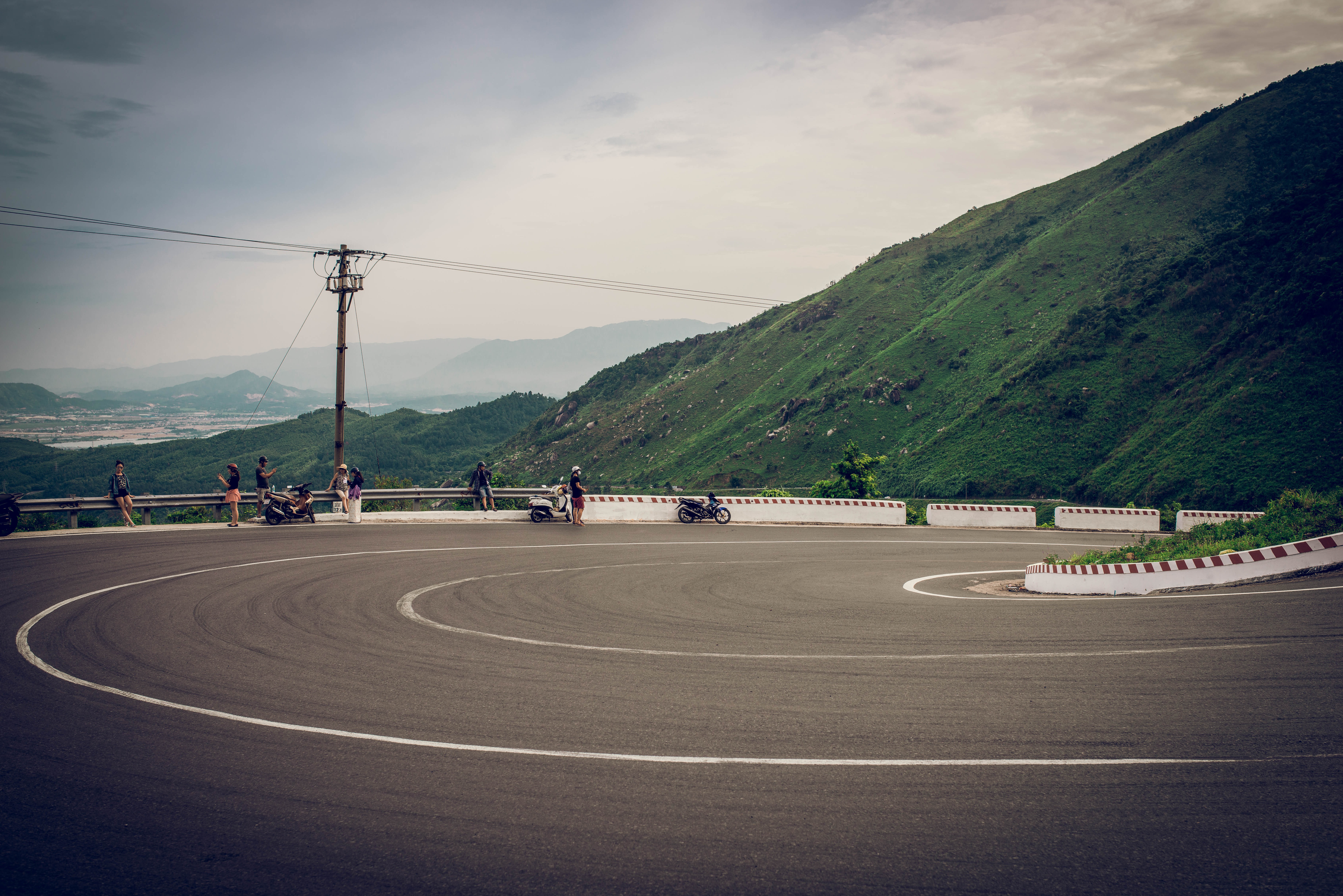
Climbing Difficulty
Thuy Son involves continuous stair climbing, steep in places, uneven throughout, and narrow inside the cave passages. It is not suitable for visitors with significant mobility limitations without using the elevator for the ascent.
Beyond the elevator, the paths require agility rather than fitness: low cave ceilings (duck in several sections), slippery wet stone in the caves year-round, and occasional near-vertical short climbs between levels.
Footwear matters: Sandals, flip-flops, and smooth-soled shoes make the marble steps genuinely dangerous, the stone is polished smooth by millions of visitors and becomes extremely slippery when wet. Closed shoes with any grip are strongly advised.
Temple Etiquette
- Remove shoes before entering shrine chambers (signs indicate where)
- Dress modestly, shoulders and knees covered
- Move quietly inside the cave temples, active worship continues daily
- Ask before photographing monks or people in prayer
- Make a small offering at donation boxes if you enter a shrine
- Follow the one-way paths where marked
- Use flash photography inside the cave shrines
- Touch or climb on Buddhist statues for photos
- Enter with shorts above the knee or sleeveless tops (sarongs available at gate)
- Eat or drink inside the cave temple chambers
- Be loud during active prayer sessions
- Block the narrow cave passages with group photos
Photography Tips
The Marble Mountains reward photographers who arrive early and slow down inside the caves. Key tips:
Huyen Khong Cave light shafts: The natural skylights in the ceiling produce visible beams of light onto the main altar between 8am and 10am on sunny mornings. Position yourself at the rear of the chamber, shoot toward the front, and expose for the mid-tones, the shafts are bright enough to blow out highlights on auto exposure.
A wide-angle lens (24–28mm equivalent) captures the full scale of the chamber.
Summit views: The north-facing Vong Giang Dai viewpoint shoots best in the morning with Da Nang city as the backdrop. A telephoto lens (85–135mm equivalent) pulls the Dragon Bridge out of the city skyline effectively.
Marble carving district: The road directly below the south entrance is lined with marble workshops, active carving with angle grinders and hand tools, stone dust in the air, and finished statues stacked everywhere. Genuinely photogenic and often ignored by visitors who exit through the main gate.
Time Required
| Visit Type | Time | Covers |
|---|---|---|
| Quick visit | 1.5–2 hours | Elevator up, Huyen Khong Cave, walk down |
| Standard visit | 3 hours | All caves, summit viewpoint, temple complex |
| Full visit | 4+ hours | Above + Hoa Son (Fire Mountain), marble district |
Getting There
The Marble Mountains are at Huyen Tran Cong Chua street, Ngu Hanh Son District, 9km south of Da Nang's My Khe Beach and 19km north of Hoi An. They're a natural stop between the two cities if you're doing the Hoi An day trip by Grab or private car.
A one-way Grab from My Khe Beach costs approximately 60,000–90,000 VND (10 minutes). Non Nuoc Beach is 500m east of the main entrance, combine both in a half-day.
Nearby Hotel Recommendations
Staying south of Da Nang city puts you within 10 minutes of the Marble Mountains and closer to both Non Nuoc Beach and the Hoi An road. These properties are well-positioned for combining a Marble Mountains visit with beach time:
→ Da Nang Beach Hotels, Non Nuoc Beach properties closest to the Marble Mountains.
→ Where to Stay in Da Nang, Full area breakdown including the southern beach zone.
→ Hotel Price Index, Current rates by tier and season.
Combine with: The Marble Mountains pair naturally with a Non Nuoc Beach morning (500m away) or as a stop on the Hoi An day trip route. See our Things to Do guide and 3-Day Itinerary for suggested structures.