Area Guide · Updated May 2026
Ancient Town walkability, An Bang beach access, riverside pools, or countryside calm — every area explained honestly with hotel picks, pros, and cons.
The short version
Hoi An is a compact town, and most areas are connected by a short Grab ride or bicycle. The key variable is whether you prioritize walkability to the Ancient Town versus beach access. These two things pull in opposite directions geographically. The riverside strip is the only area that doesn't force you to compromise completely.
Area 1
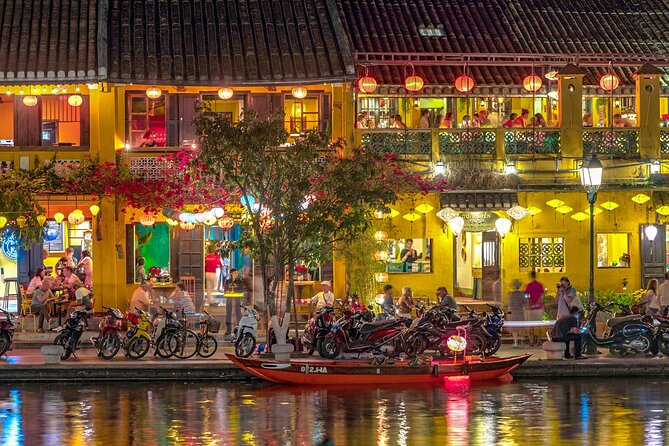
The Ancient Town is the UNESCO-listed historic core of Hoi An — the lantern-lit streets, the Japanese Covered Bridge, the merchant houses, the tailors, the cao lau restaurants. Staying here means you are in the middle of everything from the moment you step outside your door.
In practice, "inside the Ancient Town" means within or immediately adjacent to the pedestrianised zone bounded roughly by the Thu Bon River to the south and Bach Dang Street to the north. Hotels here tend to be small heritage properties — converted merchant houses, boutique guesthouses, and small inns. Many have no pool, or a tiny shared rooftop splash pool. Rooms can be narrow and dark in the older buildings.
The trade-off is clear: maximum atmosphere, minimum comfort per dollar. You're paying for location and character, not square footage or facilities. The streets get loud and busy from around 4pm and quiet again after 10pm. During the Full Moon Lantern Festival, it's genuinely magical — and genuinely crowded.
Area 2
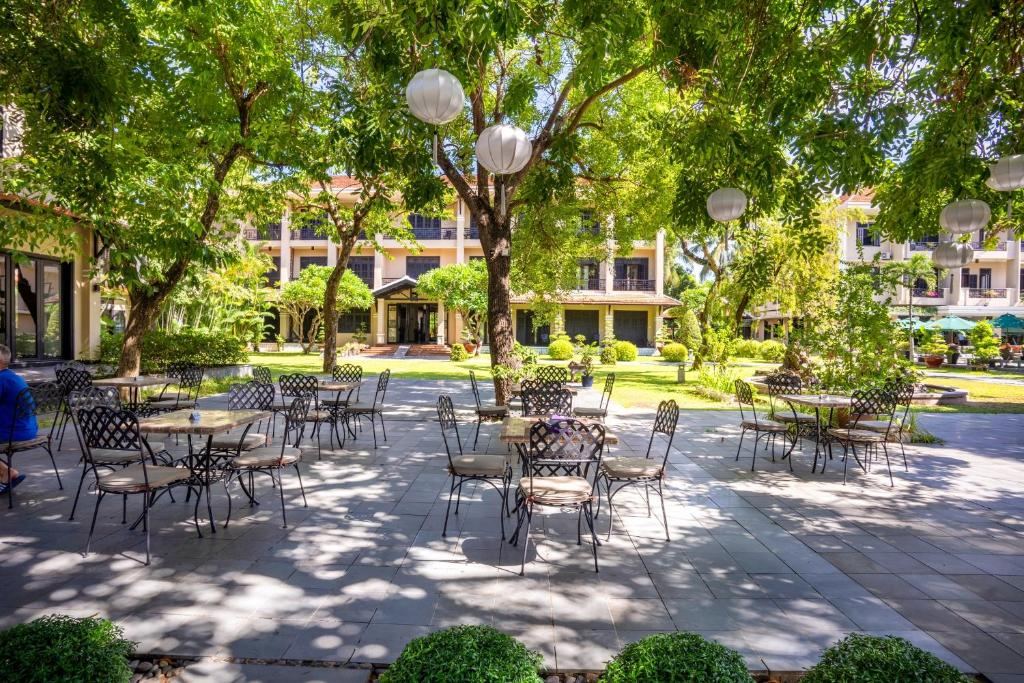
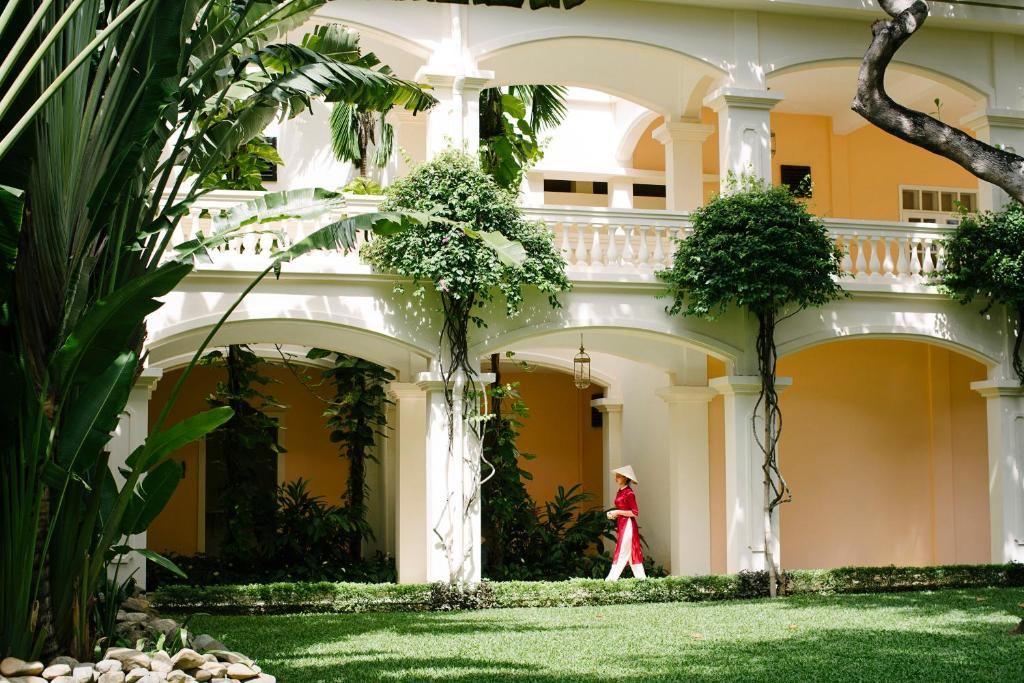
The riverside strip runs along and parallel to the Thu Bon River, roughly a 5–15 minute walk from the Ancient Town entrance. This is where most of the better-quality boutique hotels concentrate, and it's the recommendation for the majority of visitors.
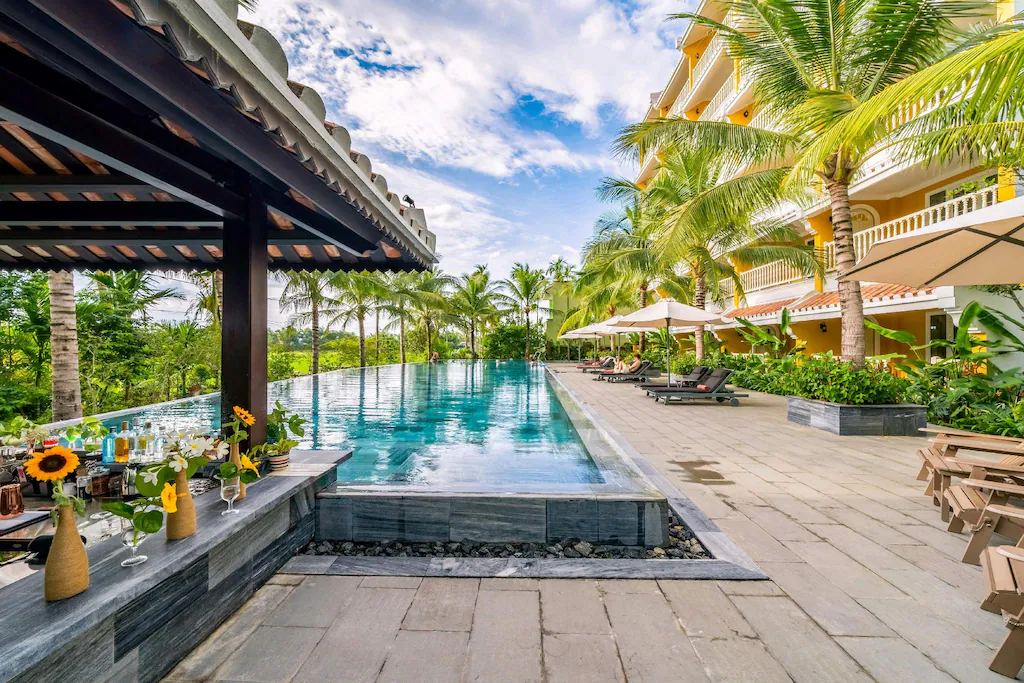
You get pool access, which the Ancient Town rarely offers at the same price point. You get green space — the riverside hotels tend to have gardens and river-facing terraces. And you're still close enough to walk to the Ancient Town whenever you want, rather than relying on transport.
Anantara Hoi An Resort sits right on the river and is genuinely one of the nicest places to stay in Central Vietnam. Almanity Hoi An Wellness Resort combines a strong spa program with good pool facilities and is an easy walk to Old Town. La Siesta Resort & Spa is another strong option in this zone. Phu Thinh Boutique Resort is on the quieter side of the river and delivers excellent value.
If you're visiting Hoi An for the first time and can't decide where to stay, start here. You're not sacrificing walkability for comfort — you're getting both at a price that still makes sense.
Area 3
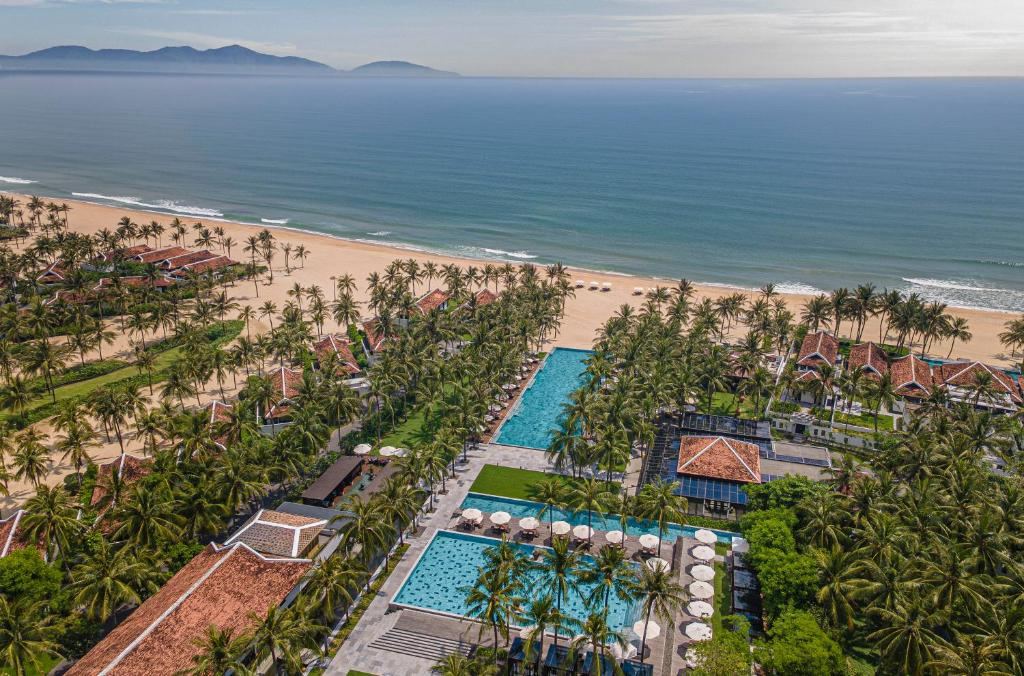
An Bang is the better of Hoi An's two main beach areas. Located about 4km northeast of the Ancient Town, it's a quieter, less developed stretch of coast with good seafood restaurants, beach bars, and a more local feel than Cua Dai. In the right swell conditions, it's also surfable.
The beach itself has held up better than Cua Dai, which has suffered significant erosion over the past decade. An Bang still has a reasonable sand beach and the water is generally cleaner. Beach chairs and umbrellas are available from the restaurants that line the shore.
From An Bang, the Ancient Town is accessible by Grab motorbike (10 minutes, around 25,000–35,000 VND), bicycle (30–40 minutes on quiet roads), or hotel shuttle. Most beach resorts in this area provide a shuttle service at set times during the day. If you plan to visit the old town most evenings, factor in those transport costs — they add up over a week.
An Bang Seaside Village and Hoi An Trails Resort are the key properties in this zone. The Four Seasons Nam Hai is technically further north (near Ha My beach), but often considered in this cluster for planning purposes.
Area 4
Cua Dai sits due east of the Ancient Town, about 5km by road. It was once Hoi An's main beach resort strip, and several large hotels developed here through the 2000s and 2010s. The problem is beach erosion.
Over the past decade, Cua Dai has lost significant sand. The beach in front of several hotels has largely disappeared at high tide, and sea walls have been built to protect remaining structures. The situation varies by season — sand returns somewhat in the dry months — but the beach quality is considerably diminished compared to An Bang.
Victoria Hoi An Beach Resort is the main operating property on Cua Dai and still has its pool, gardens, and resort facilities. The beach situation is honest to acknowledge, though. If beach quality matters to you, An Bang is the better choice. If you specifically want Victoria's old-school resort style and colonial atmosphere, Cua Dai can still work.
Area 5
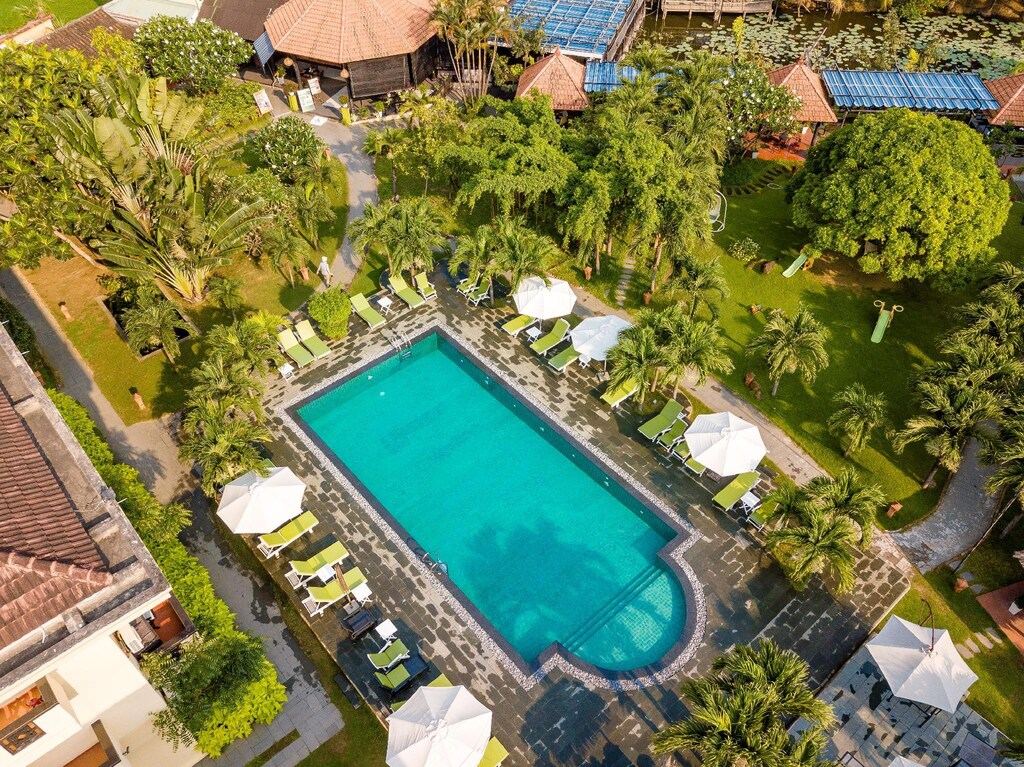
South and west of the Ancient Town, Hoi An gives way to rice paddies, vegetable farms, and the water coconut palm forests of Cam Thanh. A handful of boutique and eco-resort properties have established themselves here, catering to travellers who specifically want to escape the tourist bustle.
Basket boat tours through the coconut forest are one of Hoi An's most distinctive experiences and are based in Cam Thanh. Cooking classes using locally grown produce, organic farm tours, and cycling through rural landscapes are all possible from this area.
The trade-off is distance and transport dependency. You'll need a Grab or bicycle to reach the Ancient Town (typically 15–25 minutes), and there's limited independent walkability in the surrounding area beyond the farms and rivers. For the right traveller — someone who wants quiet mornings, fresh air, and to genuinely slow down — this is one of the most rewarding ways to experience Hoi An.
By traveller type
Booking tips
Book early for weekends and Full Moon Lantern Festival. Hoi An's most sought-after boutique hotels can sell out 6–8 weeks in advance for the Full Moon dates (14th of each lunar month). If you're planning around this, don't leave it late.
Free cancellation is your friend. Booking 2–3 months ahead with free cancellation gives you flexibility if plans change. Most hotels on Booking.com offer this. Lock in the rate and cancel if needed.
Shoulder season (May–June and September) offers better rates. The most dramatic price drops happen in October and November, when rain risk increases. May and June balance good weather with slightly softer demand — a good window for value.
River-view rooms cost more but are worth it at the right properties. At Anantara and Phu Thinh, the river-facing rooms are meaningfully better than those facing the road. Worth the upgrade if it's within budget.
Common questions
Find your perfect Hoi An hotel
Compare Ancient Town boutiques, riverside resorts, and An Bang beach properties. Filter by area and check live availability.
Search Hoi An hotels on Booking.com →Affiliate disclosure: we earn a small commission when you book via our links, at no extra cost to you.