
Before anything else, join the Expats in Da Nang City Facebook group. It's one of, if not the, biggest all-in-one communities for keeping tabs on the day-to-day happenings in Da Nang for people like you.
Housing leads, visa news, restaurant recommendations, local events, visa agent referrals, meetups — it's all in there.
Let's Start with the Budget Reality
Anyone who tells you that you can't live in Da Nang on $1,000 a month is flat-out wrong. You absolutely can — you just have to be honest with yourself about what that looks like.
At that budget, you're probably in what amounts to a cute, clean, perfectly comfortable apartment or studio closer to the city than the beach. Think rooftop pool, security guard, AC that works, for under $300 a month.
With your biggest cost covered, the leftover $700 goes to utilities, a co-working space or café habit, and food.
And food here is where things get genuinely ridiculous in the best way — if you're okay eating amazing Vietnamese food nine times out of ten, you can eat well for under $2 a meal. Under $1 if you know the right spots.
The sweet spot? Probably somewhere in the $1,500–$2,500 range.
That's where you have room to breathe, a nice apartment in a good area, motorbike or Grab when you need it, the occasional pizza night or bottle of something that isn't Bia Hà Nội, a trip to the mall, and actual date nights.
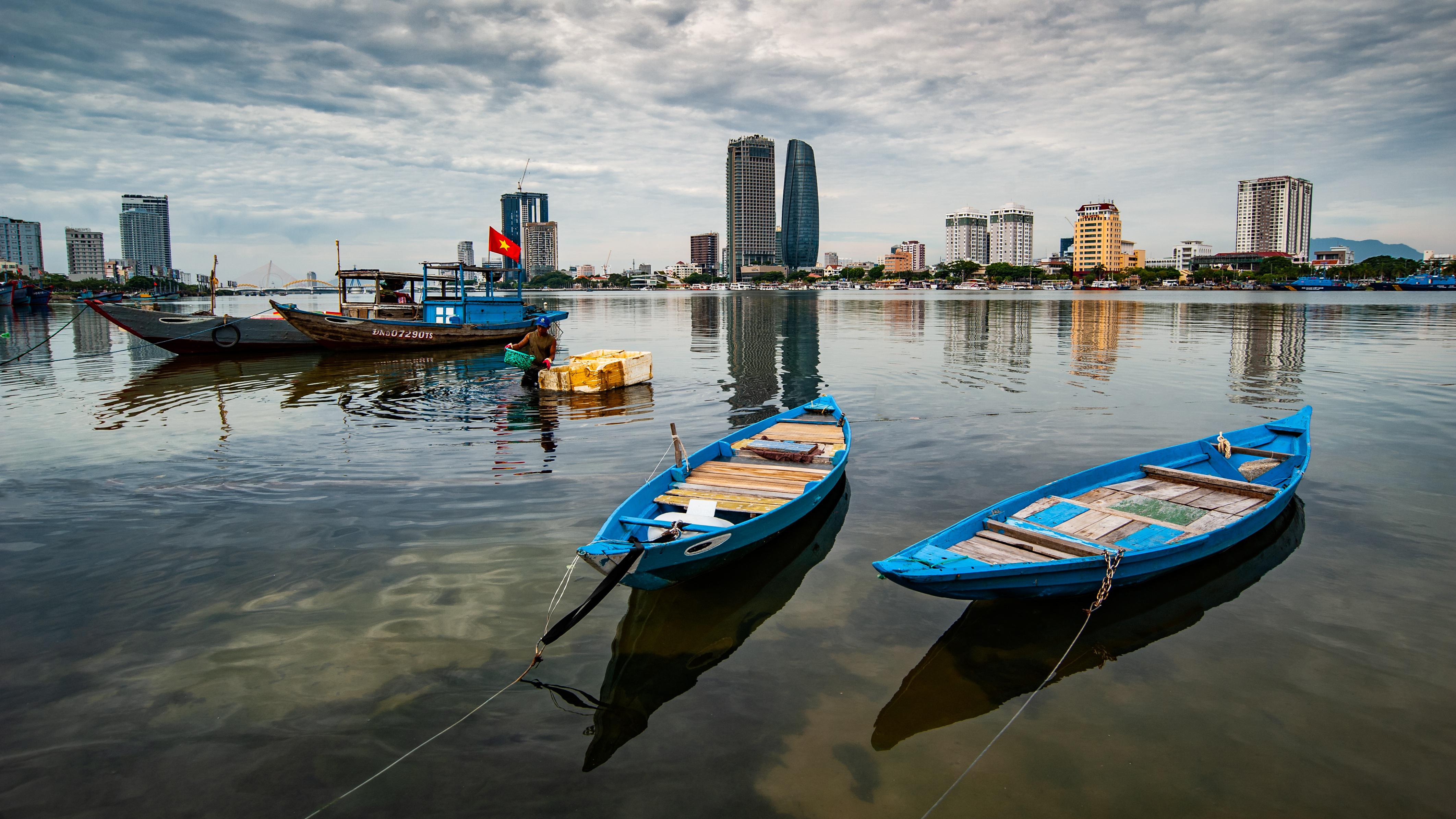
The Han River waterfront — morning tai chi, evening stalls, weekend markets. Daily life unfolds here.
Why People Keep Choosing Da Nang
Da Nang sits in a sweet spot that neither Ho Chi Minh City nor Hanoi quite offers. The cost of living is meaningfully lower, the beach is ten minutes from the city centre, the air is clean, and the city is actually manageable in size.
Around 1.3 million people — big enough to have real infrastructure and an international dining scene, small enough that you'll never spend an hour sitting in traffic just trying to get somewhere.
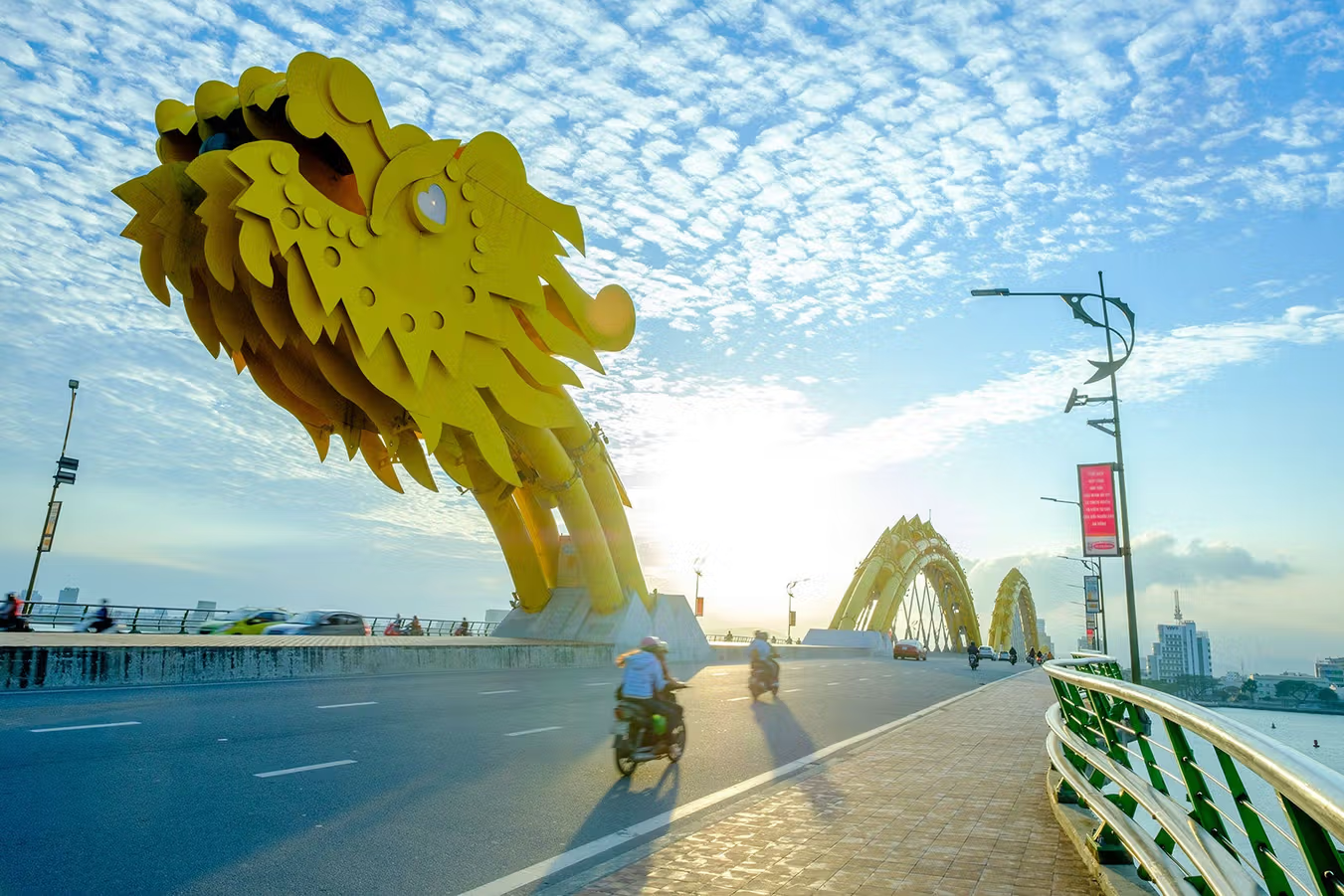
The expat community clusters around a few main areas: An Thuong (the unofficial "expat neighbourhood" near My Khe beach), the beachfront strip along My Khe itself, and the newer developments near the Dragon Bridge and Han River waterfront. The people you'll meet are mostly remote workers, English teachers, retirees, and folks running businesses in tourism or hospitality.
The city does have real limitations and I won't pretend otherwise: specialist medical care is limited (anything serious means a flight to HCMC or Bangkok), the social scene is smaller than a big city, international school options are thin, and the language barrier is more real here than it is in HCMC's Thao Dien. None of that has made me want to leave, but go in with eyes open.
A Growing Scene: Web3, Crypto & AI in Da Nang
This is something I've watched develop firsthand, and it deserves its own section. There's a real and growing trend of people working in AI, crypto, and Web3 who have started to call Da Nang home.
It's not accidental — the city's leadership has been vocal and deliberate about wanting Da Nang to become a forward-thinking financial and innovation hub, not just for Vietnam but regionally and globally.
I've been embedded in some of these circles myself, attending conferences and meetups here while juggling what is, honestly, a pretty full plate of family, fun, and work across different sectors. The meetups are small but growing.
The people are interesting. And Da Nang's infrastructure — fast internet, a new international airport, proximity to the rest of Southeast Asia — makes it genuinely viable as a base for this crowd.
Monthly Budget Breakdowns: 3 Lifestyle Levels
These are real 2026 numbers from someone who lives here. All figures in USD, convert to VND at roughly 26,000 VND per dollar.
Your mileage will vary based on habits, but these are honest starting points.
Rent in Da Nang: What Your Money Actually Gets You (2026)
Rent has crept up since 2022 — increased expat demand and Vietnam's broader urban property inflation are both factors — but Da Nang is still dramatically cheaper than HCMC's expat neighbourhoods or any comparable beach city in Southeast Asia. Here's where the market sits right now:
| Property Type | Location | Monthly Rent (USD) |
|---|---|---|
| Studio / small 1BR | City centre, non-expat area | $280–$380 |
| 1-bedroom furnished | An Thuong / expat area | $450–$650 |
| 1-bedroom furnished | My Khe beachfront | $550–$800 |
| 2-bedroom apartment | An Thuong / Son Tra | $700–$1,100 |
| 3-bedroom villa / house | Outskirts / Son Tra hills | $900–$1,600 |
| Serviced apartment (short-term) | Central / My Khe | $800–$1,400 |
This is one of the most common and most avoidable mistakes new expats make. Do not sign a long-term lease remotely.
Book a hotel for 3 to 5 days, and before you even land, have a real estate agent lined up to run you through tours. If you are organised, you can land, personally tour multiple places, pick one, and be moved in within a few days.
Most expat rentals are negotiated directly with Vietnamese landlords. The Expats in Da Nang City Facebook group and "Da Nang Housing" groups are your best free discovery tools, and prices there are almost always better than what an agent will quote you cold.
For a more structured search, CVR (cvr.com.vn) is the most established real estate company operating in Da Nang. One honest caveat: listings can be outdated because the market moves faster than any website can keep up with — good apartments get snapped up within days.
There is also a wider truth worth knowing about browsing Vietnamese property listings online: Vietnamese people are genuinely excellent at making spaces look better in photos than they are in real life. That is exactly why showing up in person matters.
The full playbook: Search Facebook groups for current leads, make a local contact who knows the market, and reach out to CVR if you want professional support. Do all three and you will be taken care of.
Leases are typically 6 or 12 months. Paying 3 to 6 months upfront in cash usually unlocks a better rate.
Budget 1 to 2 months for a deposit.
Food Costs in Da Nang
Food is genuinely where Da Nang earns its reputation. If you're okay eating Vietnamese food nine times out of ten — and honestly, once you've settled in, you probably will be, because it's that good — you can eat three full meals a day for under $8, including coffee and a cold beer at the end of it.
We're talking mỳ quảng, bún bò Huế, bánh mì, and a lot of very fresh seafood for prices that will feel almost absurd if you're coming from anywhere in the West.
| Item | Local Price (VND) | USD Approx. |
|---|---|---|
| Bánh mì (street vendor) | 15,000–25,000 | $0.60–$1.00 |
| Bún bò Huế / mỳ quảng bowl | 30,000–55,000 | $1.20–$2.20 |
| Local restaurant full meal | 60,000–120,000 | $2.40–$4.80 |
| Vietnamese iced coffee (cà phê sữa đá) | 20,000–35,000 | $0.80–$1.40 |
| Vietnamese beer (Bia Hoi / 333) | 15,000–30,000 | $0.60–$1.20 |
| Western café meal | 120,000–220,000 | $4.80–$8.80 |
| Western restaurant dinner (mid-range) | 250,000–500,000 | $10–$20 |
| Supermarket (weekly groceries) | 600,000–1,200,000 | $24–$48 |
| Imported craft beer (bar) | 60,000–110,000 | $2.40–$4.40 |
Getting Around Da Nang
Da Nang is a motorbike city — flat, well laid out, and mercifully easy to park compared to anywhere else in Vietnam. If you're staying longer than a month, you should seriously consider just buying one instead of renting.
Expats come and go constantly, and used bikes are easy to find through the Facebook groups. A decent second-hand Honda Wave will run you $300–500.
A used automatic Honda Air Blade or Vision is $700–1,200. Monthly running costs are around $40–70.
Grab is genuinely great here. Think of it like Uber, but cheaper, faster, and with cleaner cars. A Grab car across the city is $2–3.
A bike even less. And drivers usually show up in under five minutes.
The only time a Grab ride costs more than $3 is if you're heading to Hoi An or the airport — plan accordingly.
Motorbike options
Buying: A decent second-hand Honda Wave (manual) costs $300–500. A used Honda Air Blade or Vision (automatic) runs $700–1,200.
Budget for registration and either a local motorbike licence or an international driving permit. Monthly running costs around $40–70.
Renting long-term: $60–90/month from a reputable shop for an automatic scooter. Good for the first month or two while you figure out your situation.
Grab and taxis
Grab motorbike across the city: $0.80–$2.50. Grab car: $2–6.
Most budget expats use Grab for bad weather days or late nights and ride their own bike the rest of the time.
Car rental
Monthly car rental runs $500–900/month for a basic sedan. Not many solo expats bother, but for families with kids, or anyone doing regular trips to Hoi An or Hue, it makes more sense.
Healthcare in Da Nang
Healthcare has improved a lot since I got here, but it's still the most honest limitation I'd flag for anyone considering a long-term move. Here's the real picture:
For routine care: You're genuinely well covered. Family Medical Practice Da Nang and several international-standard clinics handle GP visits, dental, minor illnesses, and lab tests without issue.
A consultation at an international clinic runs $30–80. Dental care is exceptional value — cleaning for $15–30, crowns for $150–350, implants for $600–1,200.
For anything serious: Be honest with yourself about this. Da Nang General Hospital handles emergencies, but if you need specialist surgery or complex diagnostics, most expats fly to Ho Chi Minh City (Vinmec International, FV Hospital) or Bangkok.
Medical evacuation insurance is not optional if you're staying long-term.
Health insurance: Budget $80–200/month for a solid expat health plan that covers medical evacuation and inpatient care. Don't skip this.
International Schools in Da Nang
I'll be straight with you: if international schooling is a major priority, Da Nang is genuinely limited. It's one of the real trade-offs compared to HCMC or Hanoi.
The options that exist as of 2026:
- International School of Da Nang (ISD): The largest and most established option. IB curriculum. Annual fees roughly $8,000–14,000 USD depending on year level.
- Horizon International Bilingual School: Vietnamese-English bilingual curriculum. More affordable, roughly $4,000–7,000/year. Better suited to families intending longer stays who want local integration.
- British International School Da Nang: British curriculum. Fees in the $10,000–16,000/year range for older years.
If you have kids at secondary school level and need strong university pathway options, HCMC or Hanoi are honestly the more realistic choices. That's just the truth.
Internet and Connectivity
Da Nang's internet is genuinely fast — better than a lot of Western cities and well ahead of most of Southeast Asia at these price points. Home fibre through Viettel, VNPT, or FPT runs $12–25/month for 100–500 Mbps.
Mobile data through Viettel or Vinaphone is cheap and reliable: 4G SIM cards with 20–30 GB run about $5–10/month. If you're working remotely, this is one of the things that just works here and doesn't require a workaround.
Co-working spaces are solid and growing — check the Da Nang digital nomad guide for full details on workspaces, cafés by neighbourhood, and connectivity.
Visas for Long-Term Expats
Vietnam's visa system is a work in progress — it has gotten better but it still changes frequently and without a lot of notice. Here's where things stand as of 2026:
- E-visa (EV): 90-day multiple-entry visa, extendable once for another 90 days. Available for most nationalities. Best for initial moves and trial stays.
- Visa exemption: Citizens of many countries (UK, Germany, France, Italy, Spain, and others) receive 45-day visa-free entry. Check current exemption lists as these change.
- 1-year business visa (DN visa): Requires a Vietnamese business sponsor. The standard long-term option for many expats.
- Temporary residence card (TRC): For those married to Vietnamese citizens or employed by Vietnamese companies.
- Border runs: Da Nang's proximity to Laos makes Lao Bao border a common option. See the Da Nang visa run guide for details.
Vietnam's visa regulations change with limited notice. The information above reflects general conditions as of early 2026 but should not be used as legal advice.
Consult a reputable local immigration agent for your specific nationality and situation. Lynn Visa Da Nang is well-regarded among the local expat community for English-language immigration support.
Banking and Money in Da Nang
Opening a Vietnamese bank account as a foreigner requires a valid visa and your passport. Techcombank and BIDV are the most expat-friendly — English-language apps, decent international transfer support, and staff in the city branches who are used to dealing with foreigners.
The process usually takes 1–3 days. Most people I know keep a home country account for receiving income and international transfers, and a local VND account for day-to-day spending.
ATMs are everywhere. VCB (Vietcombank) and BIDV have the lowest foreign card fees, but you're still looking at $3–6 per withdrawal on an international card.
Do weekly pulls rather than daily ones to keep those fees from adding up quietly.
Da Nang vs. Chiang Mai, Bali, and Ho Chi Minh City
People ask this comparison constantly, so here's my honest take. Da Nang and Chiang Mai are roughly equivalent in overall cost.
Da Nang is slightly cheaper than Bali at mid-range lifestyle levels — Canggu and Seminyak have gotten expensive fast. And Da Nang runs about 15–25% cheaper than Ho Chi Minh City for equivalent-quality accommodation and dining.
What Da Nang has over all of them: the beach is genuinely swimmable and beautiful, the city is small enough to feel human, and it's still authentically Vietnamese in a way that some of the more tourist-saturated spots in the region are not. For a remote worker, a retiree, or someone in the tech/crypto world who wants a clean and comfortable base without the chaos or the cost of a major city, Da Nang consistently comes out ahead.
That's why I'm still here.