
What Is Son Tra Peninsula?
Son Tra Peninsula (Bán đảo Sơn Trà) is a 4,000-hectare forested headland that juts into the South China Sea just 10 kilometres northeast of Da Nang city centre. It's the closest thing Vietnam has to a protected urban nature reserve with a beach attached, jungle-covered hills rising to 696 metres, small secluded coves, and a resident population of rare Red-shanked Douc langurs that you can genuinely see from a motorbike if you time it right.
Locals call it Monkey Mountain (Núi Khỉ), a name that tourists quickly adopt once they spot the langurs watching them from the treetops. The peninsula is also home to Da Nang's most recognisable landmark: the 67-metre Lady Buddha statue visible from almost anywhere in the city.
There are military installations on the summit (a legacy of the American War and continuing strategic importance) but the road that winds around the peninsula's coast is fully accessible to visitors.
Son Tra is free to enter. A motorbike circuit takes 2–3 hours.
The peninsula is accessible year-round, mornings are ideal for langur sightings and views before haze builds. The drive up is winding and some sections are steep; confident riders only on the summit road.
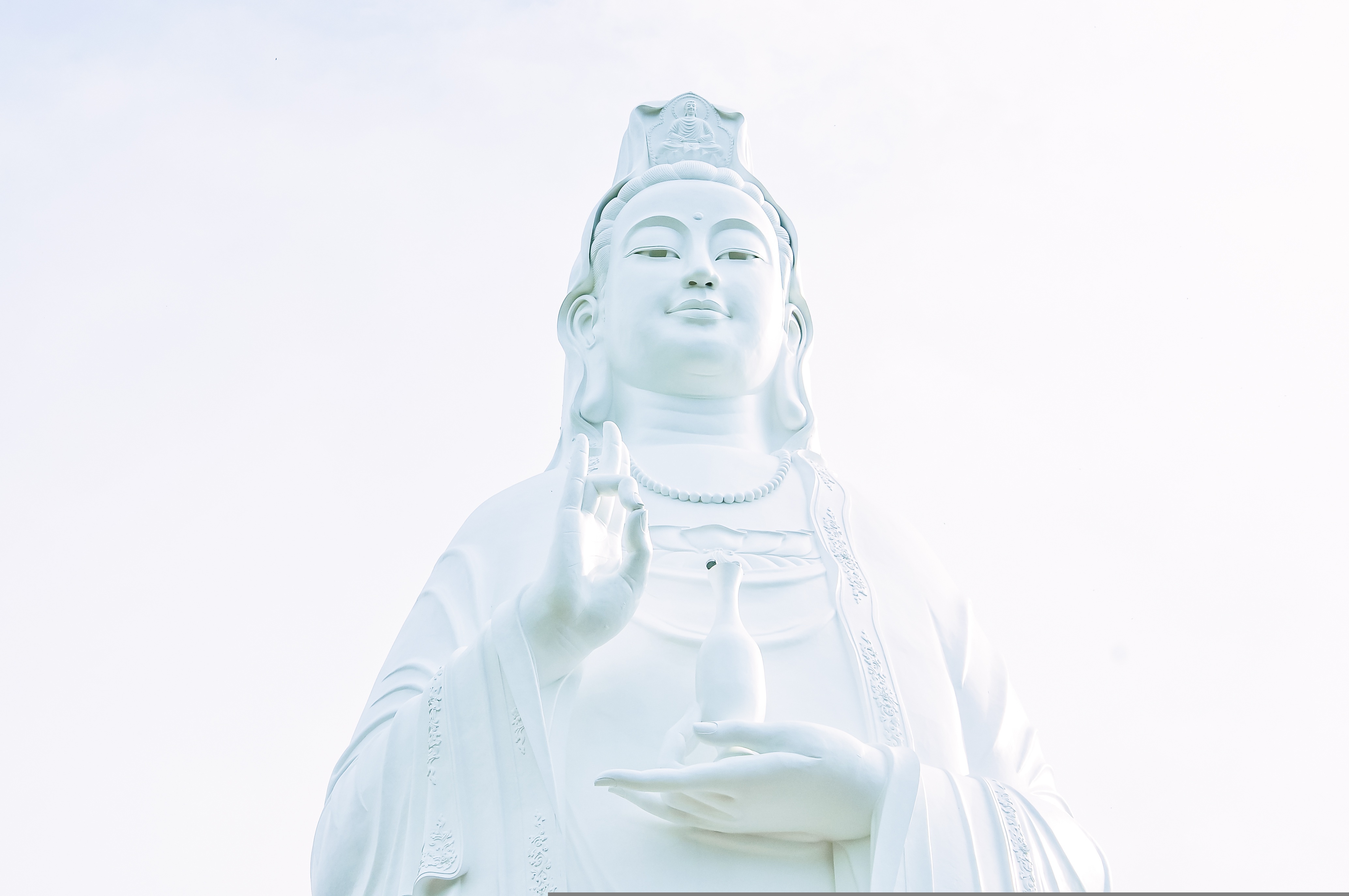
The 67-metre Lady Buddha at Linh Ung Pagoda is visible from much of the city.
Top Attractions on Son Tra Peninsula
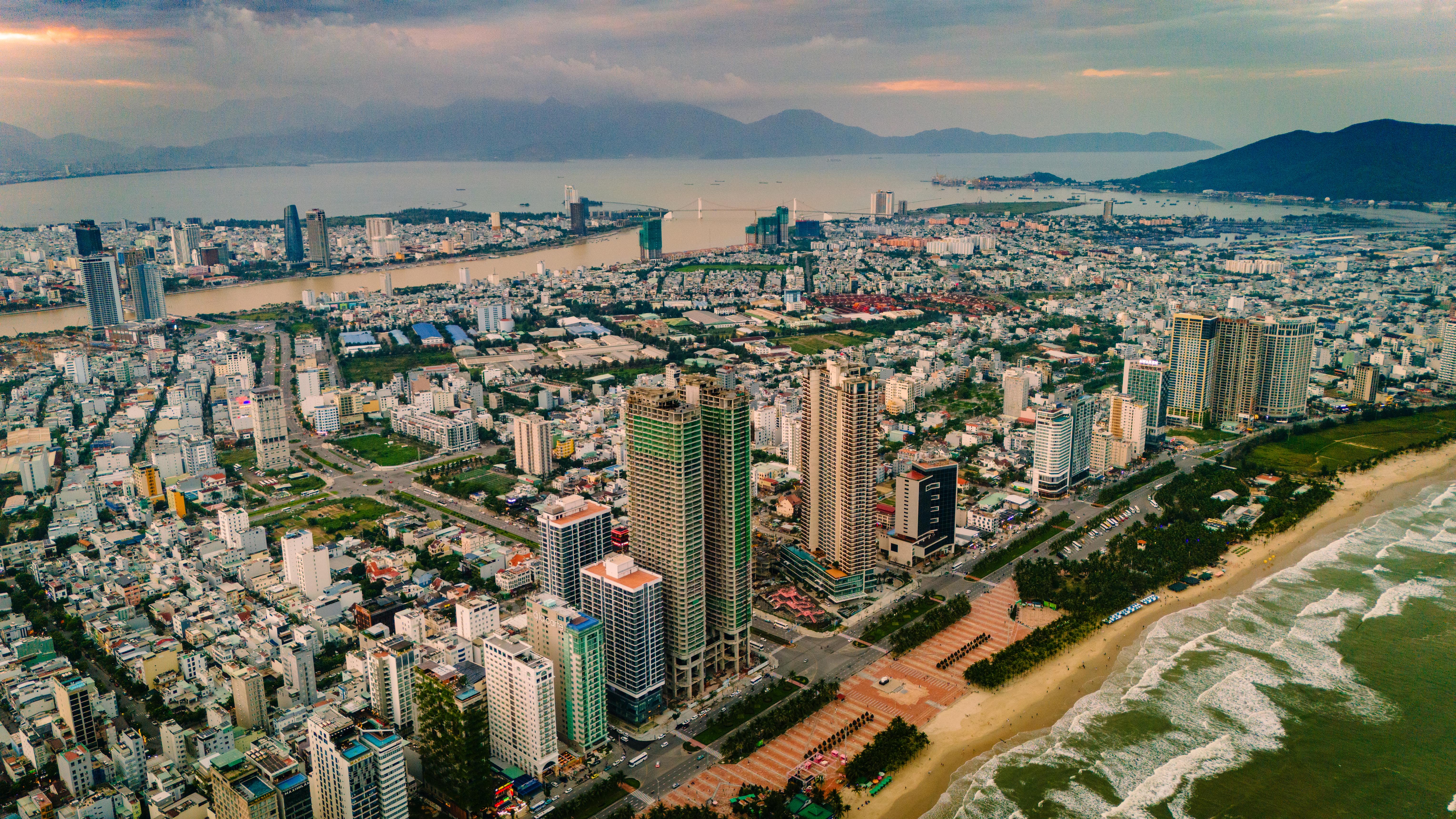
Son Tra's western slopes look directly over My Khe — one of the best viewpoints in the city.
The Lady Buddha (Linh Ung Pagoda), What to Expect
Linh Ung Pagoda is a working Buddhist temple complex, not a tourist attraction, though it receives both in large numbers. The Lady Buddha statue standing at its entrance is 67 metres tall, making it one of the tallest Buddha statues in Vietnam.
She faces the sea, traditionally protecting fishermen and sailors on the water below.
The pagoda complex itself is large and peaceful, with multiple halls, resident monks, incense offerings, and excellent views west toward the city. There is no admission fee.
Dress code applies, shoulders and knees must be covered. Modesty clothing is available to borrow at the entrance.
Mornings from 7–9am are the best window: fewer tour buses, cooler temperatures, and good light on the statue. By 10am on weekends, the car park fills completely.
The road up is accessible by both motorbike and car.
Don't just photograph the Lady Buddha from the main terrace and leave. Walk through the pagoda's rear gardens and up the small hill behind the complex, the views over Da Nang Bay from the upper terraces are better than what most visitors ever see, and the crowd thins dramatically.
Red-shanked Douc Langurs: How to See Them
The Red-shanked Douc langur (Pygathrix nemaeus) is one of the world's most striking primates, sometimes called the "costumed ape" for its extraordinary colouration. Son Tra hosts one of the most accessible wild populations anywhere.
They are officially protected but genuinely wild, and sightings are not guaranteed.
Best strategy: Ride the forest road between Linh Ung Pagoda and the Ban Co Peak area at either sunrise (6–7am) or late afternoon (4–5:30pm). Move slowly and scan the tree canopy rather than the road.
Langurs are most active in these cooler hours and often descend to lower branches.
When you spot them: stop the bike quietly, stay on the road, and observe from a distance. Do not feed them, feeding habituates them to human contact and harms the population.
Do not play sounds from your phone to attract them closer. Photography is fine; a telephoto lens or phone zoom will get better results than trying to approach.
Hidden Beaches on Son Tra Peninsula
Bai But Beach
The best swimming beach on the peninsula. A small sheltered cove accessible via a turn-off on the eastern road, look for the concrete path descending to the shore.
The water is notably clearer than My Khe (less boat traffic, more reef coverage). There are no lifeguards here, few facilities, and the road down is steep.
Best visited with a group, not ideal for solo swimmers.
Tien Sa Beach
Near the Tien Sa Port on the northern edge of the peninsula. The beach here is wider and has more infrastructure, but it's occasionally affected by port activity.
Good for a quick swim on a circuit of the peninsula rather than a beach day destination. A few seafood shacks operate nearby.
Nam O Beach
Not technically on the peninsula but at its base on the western side, a quiet fishing village beach that's becoming increasingly popular with Da Nang residents looking to escape the more crowded My Khe area. Known for fresh seafood served directly from the fishing boats.
Driving Route: The Son Tra Peninsula Circuit
The circuit from Da Nang city takes 2–3 hours at a relaxed pace. Here's the recommended route by motorbike:
- Start: My Khe Beach northern end → enter Son Tra via Hoang Sa street heading northeast
- Stop 1: Linh Ung Pagoda and Lady Buddha (~30–45 minutes)
- Stop 2: Forest road section, slow ride watching for langurs
- Stop 3: Ban Co Peak viewpoint (~20–30 minutes)
- Stop 4: Bai But beach for a swim (~45–60 minutes)
- Stop 5: Tien Sa area and descent via the northern road
- Return: Back to the city via the northern coastal road
The Son Tra road network has some tight hairpin bends and steep sections, particularly on the ascent to Ban Co Peak. The road is narrow in sections, large tourist buses occasionally use it and have right-of-way.
If you're not a confident motorbike rider, stick to the lower coastal road and skip the summit section. Roads can be slippery after rain.
Best Time to Visit Son Tra Peninsula
| Season | Conditions | Recommendation |
|---|---|---|
| Feb–May | Dry, clear, not too hot | Best overall, clear views, cooler mornings |
| Jun–Aug | Hot, mostly dry, hazy afternoons | Go early morning, views degrade by 10am |
| Sep–Oct | Typhoon season, wet | Roads can flood; check conditions before going |
| Nov–Jan | Cooler, frequent rain | Possible on dry days; mist can obscure views |
Where to Eat on Son Tra Peninsula
Food options on the peninsula itself are limited. A handful of seafood restaurants operate near Bai But and Tien Sa beaches, and several informal coffee spots on the coast road serve Vietnamese iced coffee and simple snacks.
None are destination-level dining, Son Tra is for the nature and views, not the food.
The much better option is to eat before or after at one of the excellent seafood restaurants on the northern section of My Khe Beach or at the Nam O fishing village restaurants, which serve some of the freshest seafood in the Da Nang area at local prices.
Hotels Near Son Tra Peninsula
No hotels sit on the peninsula itself, it's a nature reserve. The closest accommodation is along the northern My Khe strip (10 minutes from the Linh Ung entrance) and at the InterContinental Sun Peninsula resort, which is set into the Son Tra hillside above Non Nuoc on the southern approach.
For most visitors, staying on the main My Khe strip gives the best combination of beach access and morning peninsula access. The InterContinental Sun Peninsula is in a category of its own, architecturally extraordinary, with private beach access on the southern slope, but it commands a significant premium ($200+/night).
See the full where to stay guide for a complete breakdown of Son Tra neighbourhood accommodation.