Critical booking tip: Booking a "connecting room" category on a hotel's site is a request, not a confirmed configuration. What actually gets assigned to you depends on inventory at check-in.
Email the hotel after booking and call to reconfirm 1-2 weeks out. That follow-up matters more than which website you booked through.

Family Guide · Da Nang Hotels · 2026
Da Nang Hotels with Connecting Rooms 2026
A connecting room is two rooms with a locking internal door between them, not two rooms down the hall from each other. Here's which Da Nang hotels actually have that setup.
What a Connecting Room Actually Is
"Connecting rooms" and "adjacent rooms" get used interchangeably by travelers and they are not the same thing. Adjacent rooms are two doors down the same hallway, each with its own key, no way in or out except through the corridor. Connecting rooms share an internal door between them that both parties can lock from their own side, so you get two separate rooms and a way to move between them without stepping into a public hallway.
That distinction is the whole reason to care. A family of four with kids past toddler age has a real problem: one room means everyone's rest depends on everyone else's schedule, and a hotel corridor between two adjacent rooms means a parent checking on a sleeping kid has to get fully dressed, badge out, and badge back in. A connecting room fixes both. Parents get their own room, kids get theirs, and the door between them means you can check in on a kid at 11pm without putting on shoes.
It's not just a family feature. Grandparents traveling with the group, two couples splitting a trip, or a small group that wants separate rooms but shared access all get the same benefit. The common thread is wanting privacy and proximity at the same time, which a hallway doesn't give you and one oversized room doesn't either.
Room size still matters, separately from configuration: A connecting setup at a resort (rooms often 40-60 sqm each) gives you real separate living space on both sides of the door. The same setup at a city hotel (often 25-30 sqm each) can feel like two cramped boxes sharing a door.
Check the square meterage on both rooms in the listing before you assume "connecting" solves your space problem.
Who Actually Has Them, and Who Just Has a Few
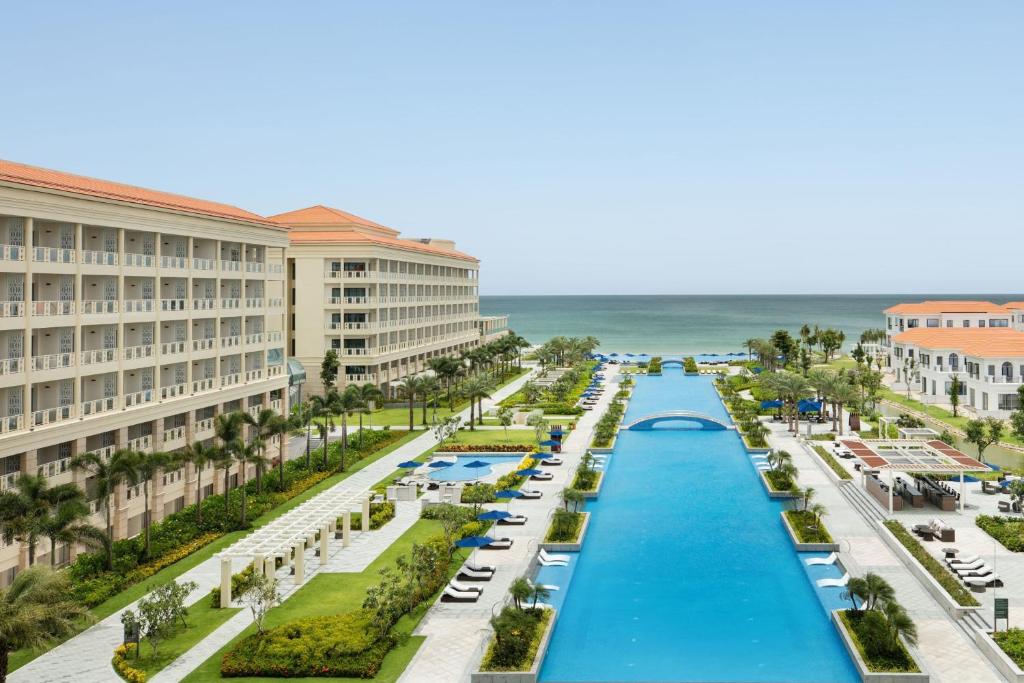
Sheraton Grand has more dedicated connecting room inventory than anywhere else in this guide, which is the practical reason it ranks first. More inventory means a better chance the configuration is actually available when you show up, not just listed as bookable months earlier. The ocean-view connecting rooms hold 4-6 people combined depending on how the two rooms are configured, with a proper internal door rather than a workaround.
The rest of the resort backs that up: a solid pool area, direct beach access, and the kind of service consistency Sheraton is known for, which matters when you're relying on staff to actually honor a room request made weeks in advance.
Even here, availability isn't unlimited. June-August is peak Vietnamese family holiday season, and connecting inventory across every Da Nang resort thins out fast. Book early if your dates fall in that window.
Book the connecting category, then email the hotel directly to get the request noted on file, not just implied by the room type you picked.
Check Sheraton Grand on Booking.com →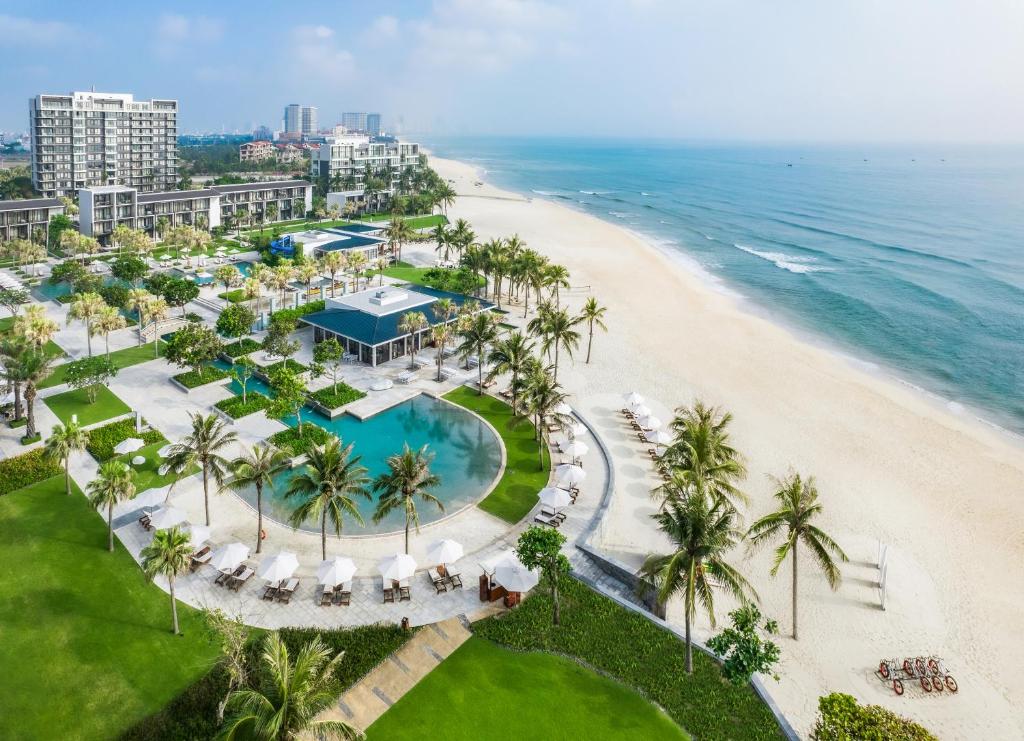
Hyatt Regency runs family suites and connecting rooms side by side, which is worth understanding before you pick one. A family suite is one large room (typically 70-90 sqm) with defined sleeping zones inside it, not a door between two separate rooms. It works when kids are young enough that everyone sleeping in the same room isn't a problem. Connecting rooms are the option when you want an actual wall and door between the adults and the kids.
The resort earns its family reputation past the room question too: six pools spread kids out without crowding the adult areas, and beach access is direct and well managed.
Location plays into the room decision here. Non Nuoc Beach is quieter and calmer than My Khe, and the resort itself feels more contained, which matters if you're supervising kids moving between a connecting room's two doors.
Also see: full family hotels guide for context.
Check Hyatt Regency on Booking.com →
Furama has been doing multi-generational family stays longer than most Da Nang resorts, and it shows in how it handles connecting requests. Interconnecting rooms come in garden or sea view, and relative to total room count, Furama's connecting inventory is deeper than most of its competitors here, which improves your odds of actually getting it confirmed.
The grounds are large enough that families spread out rather than tripping over each other, with multiple pools and direct beach access. Priced below both Hyatt Regency and Sheraton Grand, it's the pick if the room budget is doing double duty against flights and activities.
The trade-off: Furama is older than the other two, and the rooms read that way. Comfortable, not contemporary.
If the connecting door matters more to you than the finish on the furniture, that trade-off is easy to make.
Check Furama Resort on Booking.com →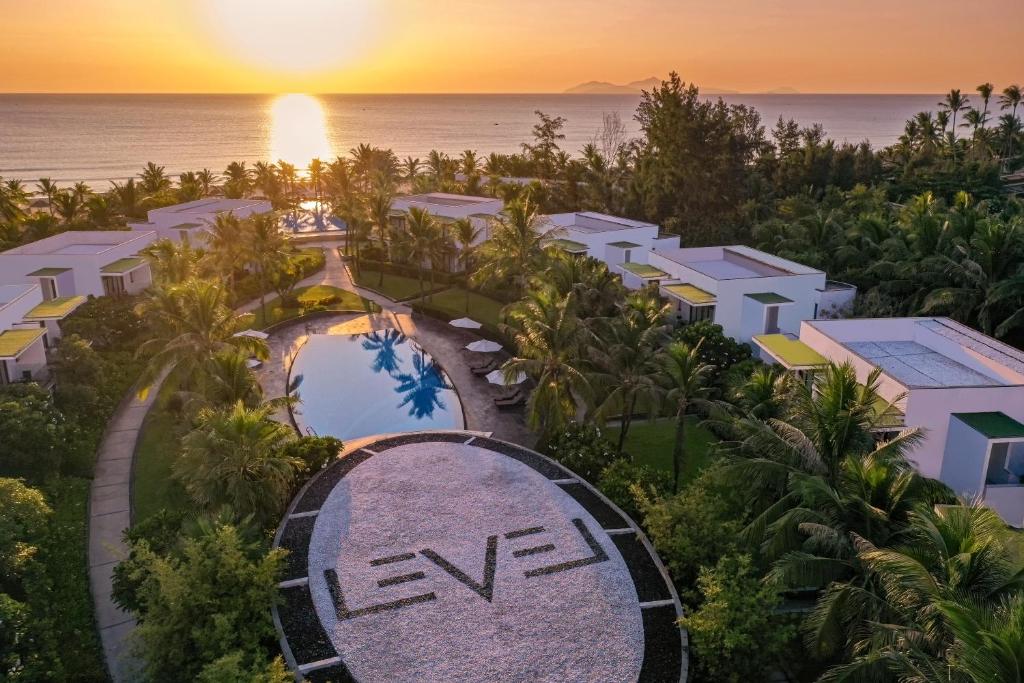
Melia has connecting configurations, but it's not built around the feature the way Sheraton is. This is one of the properties where "a few connecting rooms exist" is the more accurate framing than "connecting rooms are a category you can count on." The beach resort sits directly on My Khe Beach, room quality is good and the pools work fine, but the connecting inventory is thinner.
It's a fair mid-luxury pick for families who want a branded resort without Sheraton or Hyatt pricing.
If a connecting room is non-negotiable for your trip, confirm directly with the hotel before you book rather than after. The category showing up in search results doesn't tell you how many rooms are actually behind it.
Check Melia Da Nang on Booking.com →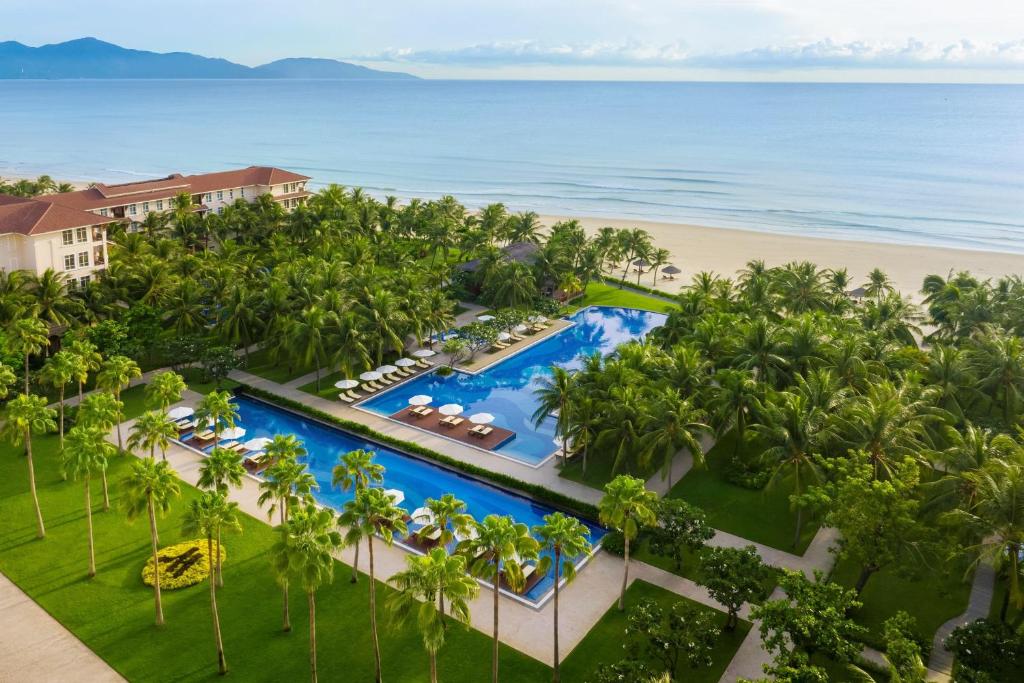
Marriott spreads connecting options across several room categories rather than one dedicated block, which is worth knowing before you assume every category connects. The property is newer than Furama and it shows in the room design, with good family facilities generally.
Like Melia, this is a resort where connecting rooms exist without being the headline feature. It's a reasonable pick, just don't expect Sheraton-level depth of inventory.
Where Marriott pulls ahead for some families is Bonvoy points redemption, which can make the effective cost meaningfully lower than the posted rack rate.
Check Marriott Resort Da Nang on Booking.com →"A connecting room lets you split into two households for the night and still be one door apart. For trips longer than three nights, that beats one large room every time."
When a Family Suite Beats a Connecting Room, and When It Doesn't
Connecting rooms aren't the only way to solve the space problem, and they're not always the right one. Some Da Nang hotels sell large family suites instead: a single room with defined sleeping zones inside it, more like a partition than a second room. No internal door, no separate entry, just more square meters divided up within one space.
Mikazuki Japanese Resorts and Spa is worth a mention here for families who need to sleep several people in one oversized room without a connecting door involved, a layout that suits Japanese-style family travel more than it suits Western travelers used to separate bedrooms.
For groups of 3+ adults or two families traveling together, connecting rooms start to strain even when they're available, since you're still capped at two rooms. Villa accommodation is the better answer at that size. Naman Retreat has multi-bedroom villas with shared living space that fit a small group more comfortably than stacking two hotel rooms ever will.
Premier Village Da Nang Resort has similar villa configurations for multi-family groups with kids. The per-night cost can land close to what two connecting rooms would run at a resort, but you get real shared living space and more privacy for the money.
Why You Have to Ask For It Twice
Connecting rooms show up as a bookable category on Booking.com and hotel websites, but selecting that category is the start of the process, not the end of it. Hotels assign specific rooms at check-in based on what's actually free that day, and a connecting pair can get split if the property is full. Here's the sequence that actually protects your request:
Step 1: Book the connecting room category itself, not two standard rooms you're hoping to connect. Standard rooms don't get paired at check-in just because you booked them together.
The category is what puts you in the right inventory pool. Nothing else does.
Step 2: Email the hotel within 24 hours of booking. Give them your confirmation number and state plainly that you need connecting rooms, not adjacent rooms.
Include the number of adults and children and their ages, and ask them to log the request against your reservation, not just read the email.
Step 3: Call 10-14 days before arrival and ask for rooms division or reservations directly, not the general line.
Restate the request and ask a direct question: is this confirmed, or should you expect to be wait-listed at check-in? Get a real answer, not a reassurance.
Step 4: At check-in, confirm the configuration before you take the keys. If the connecting rooms aren't there, ask for the duty manager and ask what they can actually offer instead.
Peak season warning: June through August is peak family travel season in Da Nang, with Vietnamese domestic holiday traffic stacked on top of international tourists. Connecting room inventory at all five hotels above gets tightest from late June through mid-August.
Book as far ahead as you can if your trip falls in that window. February-April and October-November are much easier for connecting room availability, at the cost of less predictable weather.